
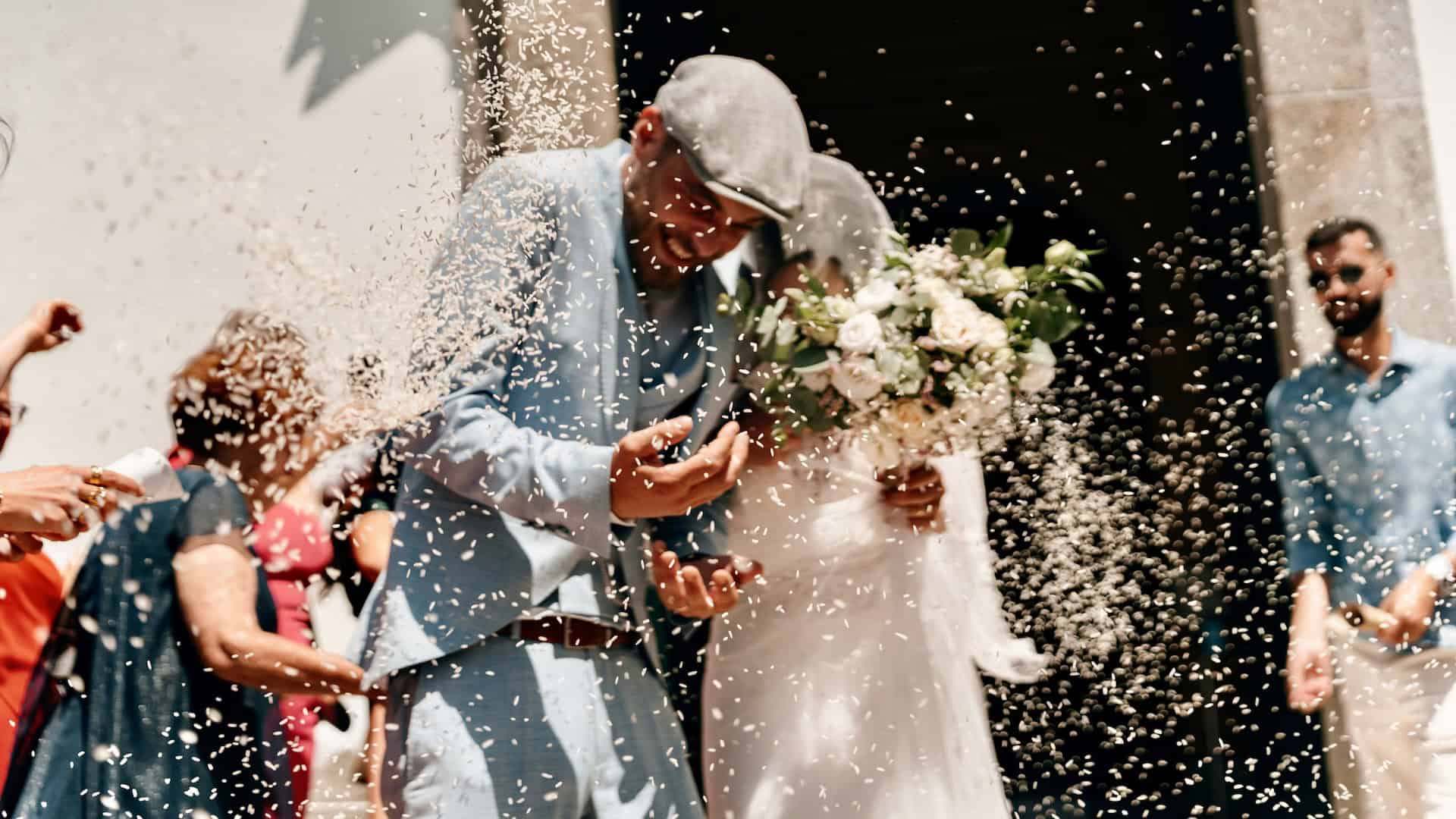
Cultural Wedding Traditions from Around the World to Inspire Your Big Day
Cultural wedding traditions remind us that a wedding is more than a timeline of photos or a set of formalities; it is a meaningful celebration shaped by rituals, emotions, and shared values. The most unforgettable weddings are not the most elaborate, but the ones filled with purpose, where every moment, from honoring elders to welcoming families and blessing the union, carries genuine significance and joy. Whether you are planning your wedding at home or dreaming of any wedding destinations, the question remains the same: what do you want your wedding to feel like when the music ends?
In this guide to cultural wedding traditions from around the world, you will discover unique wedding traditions, symbolic rituals, and global wedding customs, along with what they mean and how to incorporate them respectfully into your own celebration without turning culture into décor.
First: How to Borrow Traditions Respectfully (So It Lands Beautifully)
Before you choose a tradition, ask yourself: What does it mean, and whose tradition is it?
Cultural aspects can be sincere and welcoming when incorporated thoughtfully and carefully. When it is done recklessly, it can be like a costume or appropriation.
Here’s how to do it the right way
- Learn the meaning first. You should never imitate a ritual that you don’t know the symbolism of.
- Ask people from that culture. Engage older people, elders, cultural experts, planners, or community members, in case of family ties.
- Avoid sacred-only items. Certain clothes, symbols, or prayers are to be applied to particular religious situations.
- Give credit and context. Even a word or two in your program or a brief explanation of the officiant can add more to the experience.
- Support authentic vendors. In case you are wearing cultural clothes, playing cultural music, or eating cultural food, recruit artisans and professionals who are familiar with that tradition.
- Respect gives it an extra touch—and that extra touch is what makes the wedding a memory that guests will remember for a long time.
India & South Asia: Pre-Wedding Joy + Sacred Vows (Mehndi, Haldi, Baraat, Saptapadi)

Mehndi: Celebration Through Art and Story
In many cultural wedding traditions, South Asian weddings begin days before the ceremony, turning preparation into celebration. Mehndi nights bring friends and family together to apply intricate henna designs on the hands and feet, while music, teasing, and dancing create a lively, joyful atmosphere. The henna, made from the Lawsonia inermis plant, often symbolizes joy, protection, and prosperity. In some communities, storytelling flows alongside the designs, making the experience both artistic and deeply personal.
Haldi: A Blessing of Warmth and Good Fortune
Next, Haldi offers a more intimate and home-centered ritual. Close family and friends apply turmeric paste to the bride or groom, usually shortly before the wedding day. Turmeric represents good fortune and carries a message of purification and blessing, although meanings can vary by region. At the same time, laughter, bright yellow clothing, and floral settings reflect the warmth and support surrounding the couple, turning a simple ritual into a heartfelt moment.
Baraat: A Joyful Arrival
Then, the Baraat transforms arrival into celebration. The groom makes his way to the venue accompanied by music, dancing, and applause, sometimes riding a horse or arriving in a decorated vehicle. Rather than a quiet entrance, this procession sets an energetic tone, symbolizing two families coming together in joy and movement.
Saptapadi: Seven Steps, Seven Promises
Finally, the Saptapadi anchors the ceremony with meaning and commitment. In many Hindu wedding traditions, the couple takes seven steps around the sacred fire (agni), with each step tied to a vow. As they move forward together, they express shared promises and intentions. Today, many couples adapt this structure into seven personalized commitments, keeping the ritual both traditional and relevant.
Read more: 10 Best Honeymoon Destinations in India in July
Vietnam: Family Honor, Symbolic Offerings, and Meaningful Union
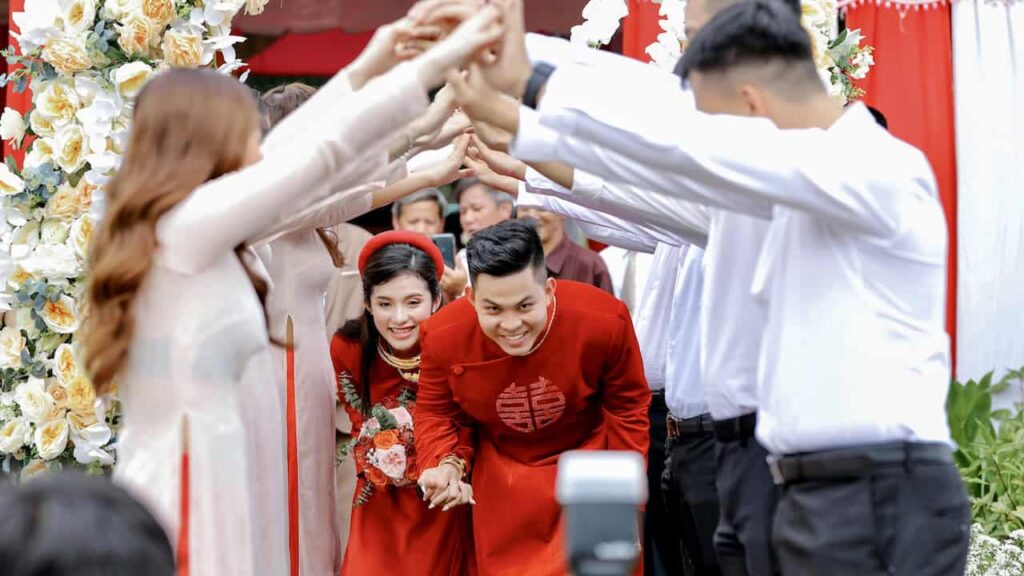
In Vietnam, cultural wedding traditions center on family connection, respect, and the formal joining of two households. Rather than focusing only on the wedding day, Vietnamese wedding customs unfold through a sequence of ceremonies, each marking a deeper level of commitment between the couple and their families. These traditional wedding rituals emphasize intention, structure, and the visible presence of both families at every step.
Lễ Dạm Ngõ: A Respectful Beginning
In Vietnam, cultural wedding traditions begin with Lễ Dạm Ngõ, a small but meaningful meeting between families. At this stage, the groom’s family visits the bride’s home to express their intention and discuss the upcoming wedding. Although simple, this moment builds trust and sets a respectful tone, which remains central to many traditional wedding rituals in Vietnam.
Lễ Ăn Hỏi: Symbolic Gifts and Family Commitment
Next, Lễ Ăn Hỏi brings one of the most recognizable Vietnamese wedding customs. The groom’s family arrives in a formal procession, carrying red-covered trays filled with symbolic offerings such as betel leaves, areca nuts, tea, fruits, and cakes. Each item represents prosperity, harmony, and sincerity. As a result, this ritual highlights not only the union of the couple but also the connection between the two families.
Lễ Rước Dâu: Welcoming the Bride
Finally, Lễ Rước Dâu marks the official wedding day. The groom’s family comes to escort the bride, after which the couple performs ancestor-honoring rituals, lighting incense and bowing as a sign of gratitude and respect. This step grounds the marriage in family heritage and continuity, a key theme in many cultural wedding traditions around the world.
How to Adapt It Respectfully
If you have a Vietnamese connection, follow family guidance closely, as each gesture carries meaning. Otherwise, borrow the essence instead of the exact form. For example, you can include a symbolic family meeting or a meaningful gift exchange. In doing so, you preserve the spirit of respect and unity that defines Vietnamese wedding traditions, while keeping your celebration authentic and personal.
China: Filial Respect + Symbolic Joy (Jing Cha, Red, Double Happiness)
Jing Cha: A Tea Ceremony of Gratitude
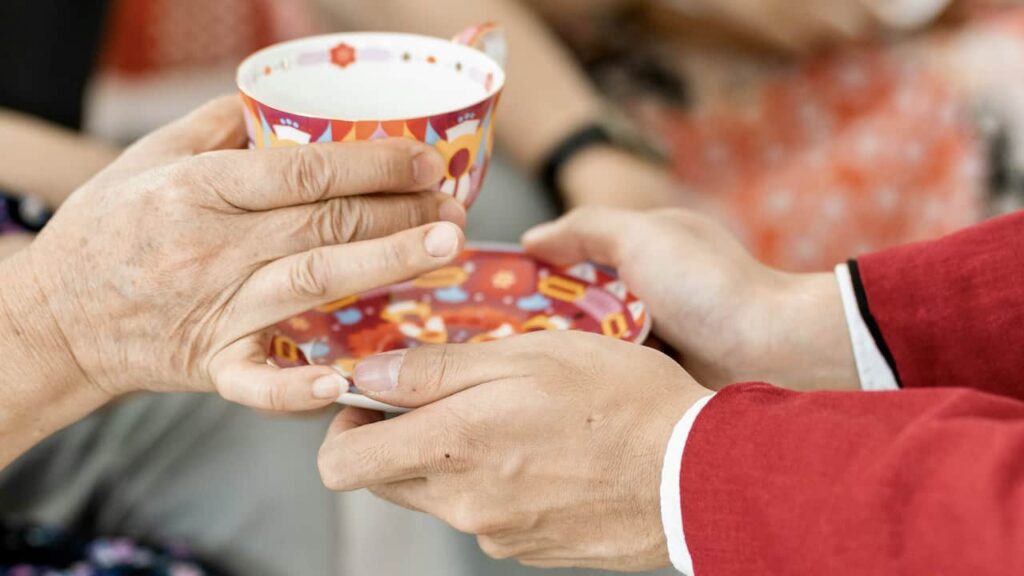
In many cultural wedding traditions, Chinese marriage customs highlight the union of two families, with a strong focus on honoring elders. The tea ceremony, known as Jing Cha, expresses this gratitude in a direct and meaningful way. During the ceremony, the couple invites parents, grandparents, and senior relatives to drink tea, usually on the wedding day, and in order of seniority. In return, elders offer blessings and often present red envelopes, jewelry, or gifts. As a result, many families now use this ritual as a heartfelt thank-you before the reception begins.
Filial Respect in Action
The reason why Jing Cha is meaningful is that it not only shows filial respect, but it enacts it. The couple kneels/bows as per family tradition, serves cups with both hands, and receives words of blessing that place the marriage within a lineage. Such a hierarchy is an indicator of responsibility: the spouses do not step away from the family; they grow it. When the family is present in the ceremony, it becomes emotionally direct, silent, brief, and clearly concerned with elders, rather than appearance and decoration.
Red and Double Happiness: Symbols of Joy
Beyond the ceremony itself, symbolism appears strongly in colors and visual elements. Red dominates invitations, dresses, lanterns, and envelopes, as it represents joy and good fortune in many Chinese wedding traditions. In addition, the Double Happiness symbol (囍), formed by combining two characters of 喜 (joy), appears on backdrops, door decorations, and wedding favors. However, when incorporating these elements, always include their origin and meaning. This way, guests understand them not as borrowed design, but as expressions of cultural joy and tradition.
Korea: A Family Ceremony That’s Serious and Sweet (Paebaek / Pyebaek)
Paebaek: Welcoming a New Family Member
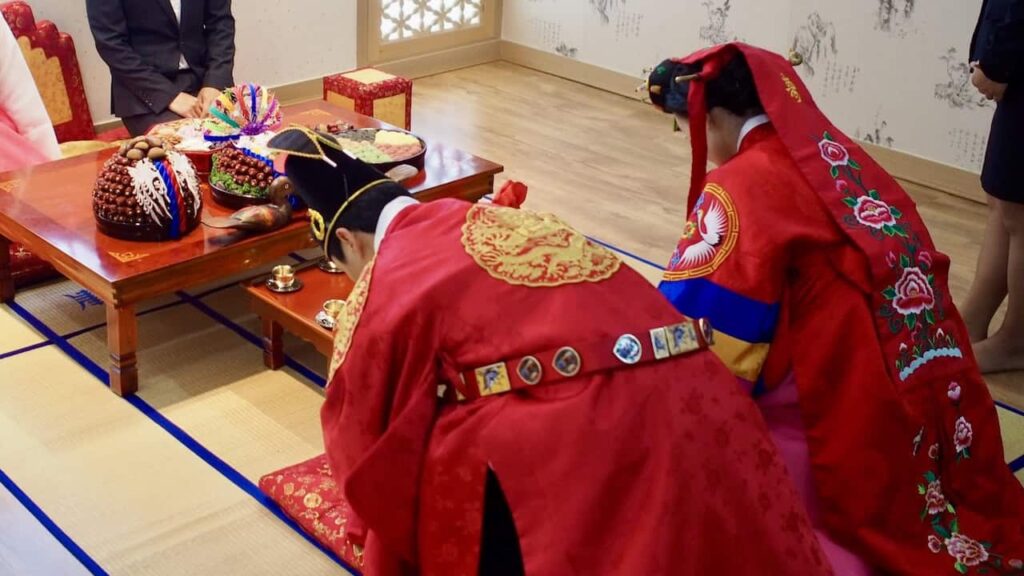
In many cultural wedding traditions, Korean weddings highlight family respect and continuity. After the main ceremony, families often hold Paebaek (폐백) to formally welcome the new in-laws. Dressed in traditional hanbok, the couple bows to parents and elders seated at a low table. In return, elders offer blessings, while symbolic foods such as jujubes and chestnuts represent wishes for children, prosperity, and good fortune.
Respect and Playfulness in Balance
What makes this ritual especially meaningful is its balance. On one hand, the bows show deep respect for those who raised the couple. On the other hand, a playful moment follows when elders toss dates and chestnuts, and the couple tries to catch them in a cloth. As a result, the ceremony moves naturally from formality to laughter, showing that duty, love, and joy can coexist within a single moment.
How to Adapt It Respectfully
Since Paebaek relies heavily on family guidance, even small details, from table setup to bowing order, carry meaning. Therefore, if you have a Korean connection, follow traditions closely. Otherwise, borrow the essence rather than the name. For example, you can include a short bow-and-blessing moment after the ceremony, where the couple honors their parents and receives a few words of advice. Adding a light, playful element keeps the warmth without replicating the full ritual.
Read more: How to Plan a Bali Wedding: What to Pack for Your Celebration
Jewish Traditions: Home, Covenant, and a Moment You’ll Never Forget
Chuppah: A Symbolic Home
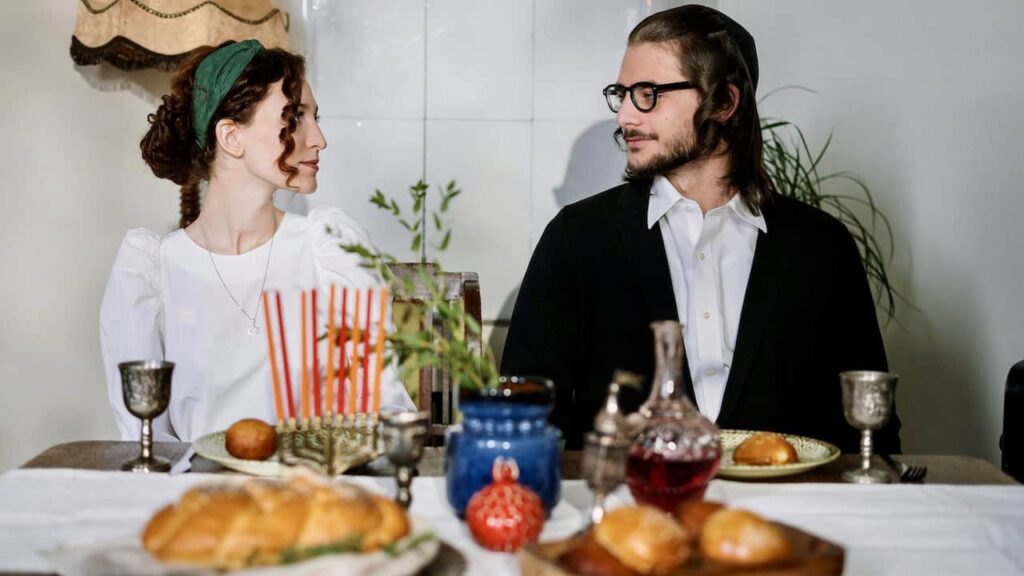
In many cultural wedding traditions around the world, Jewish weddings center on the chuppah, a canopy under which the couple stands during the ceremony. Its open sides symbolize a home that welcomes community and connection. Families often choose meaningful fabrics, such as a tallit or heirloom cloth, so the structure becomes more than décor; it becomes a living memory. However, since the chuppah holds specific religious meaning, couples outside the tradition should not replicate it.
Ketubah: Commitment in Writing
In addition, many couples sign a ketubah, a marriage contract that outlines commitment and responsibility. Typically signed before the ceremony and presented afterward, the ketubah often becomes a cherished keepsake. Unlike purely romantic gestures, it emphasizes partnership, accountability, and long-term support. Couples from other backgrounds may draw inspiration from this idea by creating a shared values agreement, without framing it as a religious substitute.
Breaking the Glass and The Hora: Joy with Depth
Finally, the ceremony often concludes with the breaking of the glass, followed by the joyful shout of “Mazel tov!” While interpretations vary, many connect this act to the idea that joy carries memory and reflection. Because of its deep cultural meaning, it should remain within the Jewish context.
At the reception, energy rises with the hora, where guests form a circle, dance together, and sometimes lift the couple on chairs. This shared celebration creates an immediate connection, turning the wedding into a lively, collective experience.
Arab and Levantine Tradition: Processions, Drums, and Collective Joy (Zaffa + Dabke)
Zaffa: A Grand and Joyful Entrance
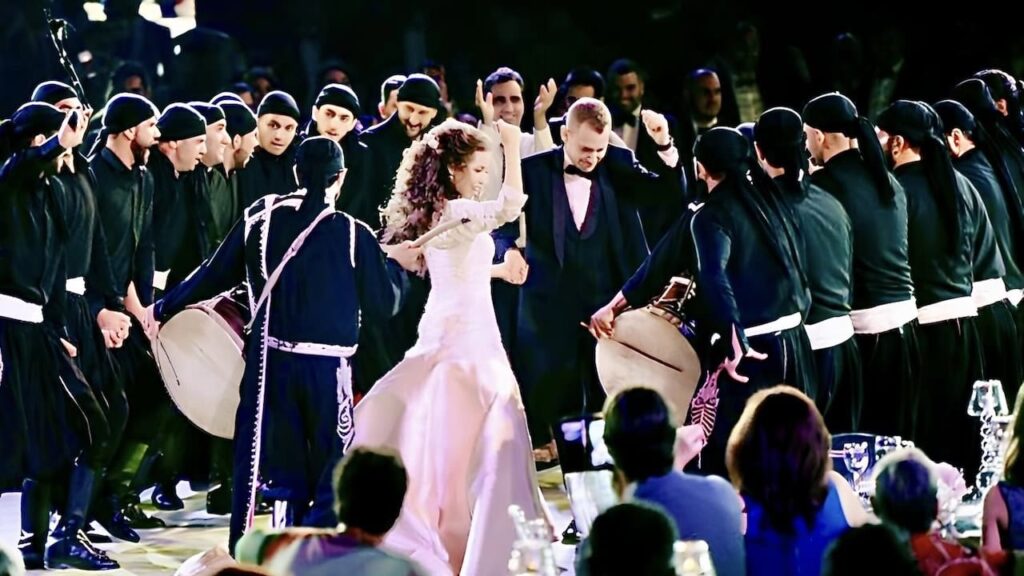
In many cultural wedding traditions around the world, Arab weddings turn the couple’s entrance into a celebration itself through the Zaffa. Drums, rhythmic chants, and lively calls lead the procession, while musicians and performers guide the couple into the space. Although styles vary by region, from Egyptian to Levantine, the purpose remains the same: the couple arrives with energy, not silence. As a result, guests immediately engage, cheering, clapping, and celebrating together.
Dabke: A Dance That Brings Everyone Together
Then, Dabke carries that energy onto the dance floor. This Levantine folk dance, popular across Lebanon, Palestine, Jordan, and Syria, forms a line or circle with joined hands and a leader at the front. With strong foot stomps and rhythmic steps, the group moves as one, while the leader signals turns and flourishes. Because weddings often introduce dabke early, guests of all ages quickly join in, transforming observers into participants within minutes.
How to Adapt It Respectfully
If this tradition connects to your heritage, use accurate regional styles and experienced musicians, as details matter. Otherwise, borrow the role rather than the name. For example, you can organize a live percussion-led entrance to create the same sense of momentum. For the dance, invite a small group or instructor to start, then allow others to join naturally. By keeping it inclusive and unstaged, you preserve the spirit of collective joy without turning it into a performance.
West Africa: Cloth as Identity + Community as the Celebration.
Kente: Wearing Heritage and Meaning
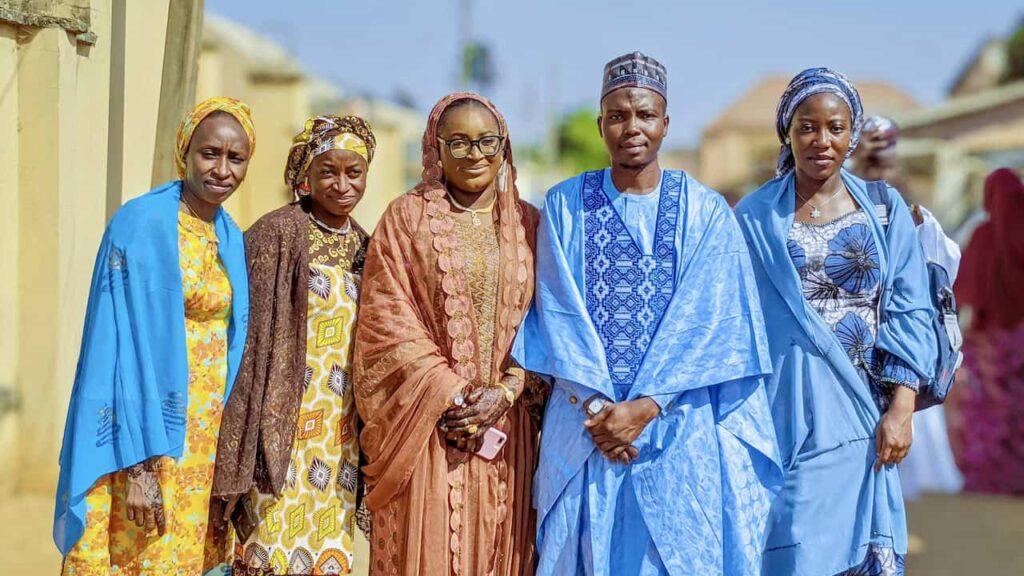
In many cultural wedding traditions, West African weddings express identity through fabric, with Ghanaian kente leading this visual language. Artisans weave kente in narrow strips and join them into bold, meaningful patterns, rooted in Akan/Asante and Ewe cultures. Each design often carries a name and proverb-like meaning, allowing the fabric to represent family pride, heritage, and the significance of the occasion. As a result, kente becomes more than decoration; it becomes a statement of identity.
Aso Ebi: Unity Through Style
Similarly, Yoruba weddings in Nigeria highlight unity through aso ebi, or “family cloth.” Friends and relatives wear coordinated outfits to show support for the couple, creating a strong visual connection across the celebration. Whether organized by one side or both, the combination of gele head wraps and tailored agbada outfits adds elegance and cohesion. At the same time, this shared style instantly builds a sense of belonging among guests.
Money Spraying: Celebration with Generosity
Finally, money spraying adds a dynamic and celebratory element. Guests place or toss money onto dancers or musicians to show joy and generosity, keeping the energy high throughout the event. However, since regulations in Nigeria may restrict how currency is handled, many couples now adapt the tradition. For example, they pin notes, use symbolic confetti, or provide envelope tables for gifting. In this way, the celebration continues freely while respecting current rules.
Read more: Say “I Do” in Style: The Best Mountain Wedding Venues Globally
Latin American and Filipino Traditions: Visible Symbols of Togetherness
El Lazo: A Cord of Unity and Support
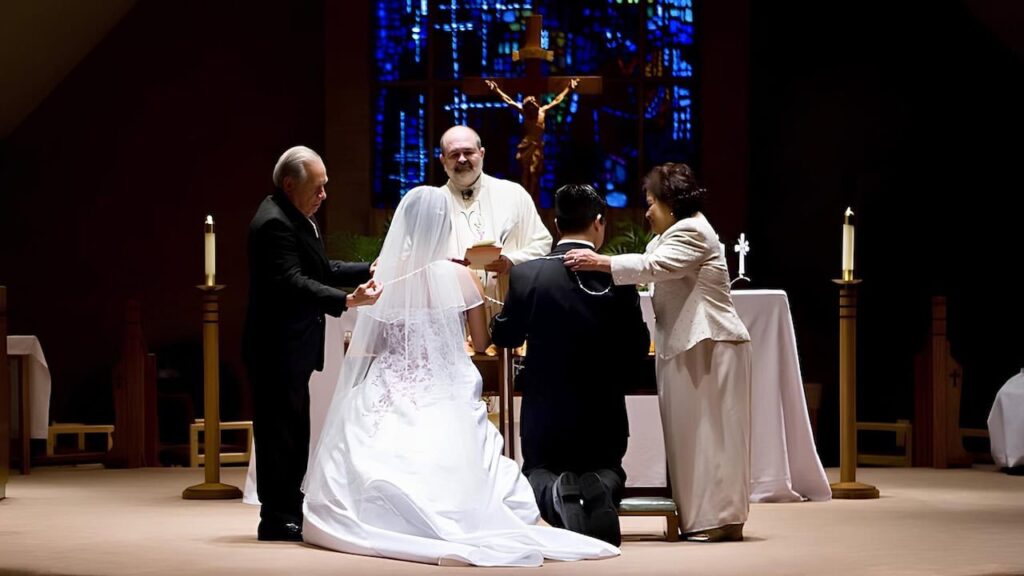
In many cultural wedding traditions around the world, Latin American ceremonies use el lazo as a visible symbol of unity. After the vows, sponsors or godparents (padrinos) place a cord, often a rosary or decorative rope, around the couple in a figure-eight shape. This loop represents two individuals becoming one, while also showing that the community actively supports the marriage. Because sponsors place the lazo, the moment highlights both family involvement and mentorship.
Las Arras: Shared Responsibility and Trust
Next, las arras focuses on shared provision. In Spain and across Latin America, the couple exchanges 13 coins, usually presented in a small box or pouch. These coins symbolize trust, generosity, and the shared responsibility of managing resources together. Similarly, Filipino weddings often include coins alongside veils or cords, with sponsors participating in the blessing. As a result, guests clearly see that partnership involves commitment and stewardship, not just romance.
How to Adapt It Respectfully
If lazo or arras belong to your family or religious tradition, coordinate closely with your officiant and sponsors to preserve their meaning. Otherwise, avoid direct replicas. Instead, create a symbolic unity moment, such as a cord placed by parents or mentors, paired with a meaningful gesture like exchanging house keys, written commitments, or a shared donation. By naming your sponsors in the program, you keep the spirit of support and responsibility intact.
European Traditions: Old-World Romance with Modern Charm
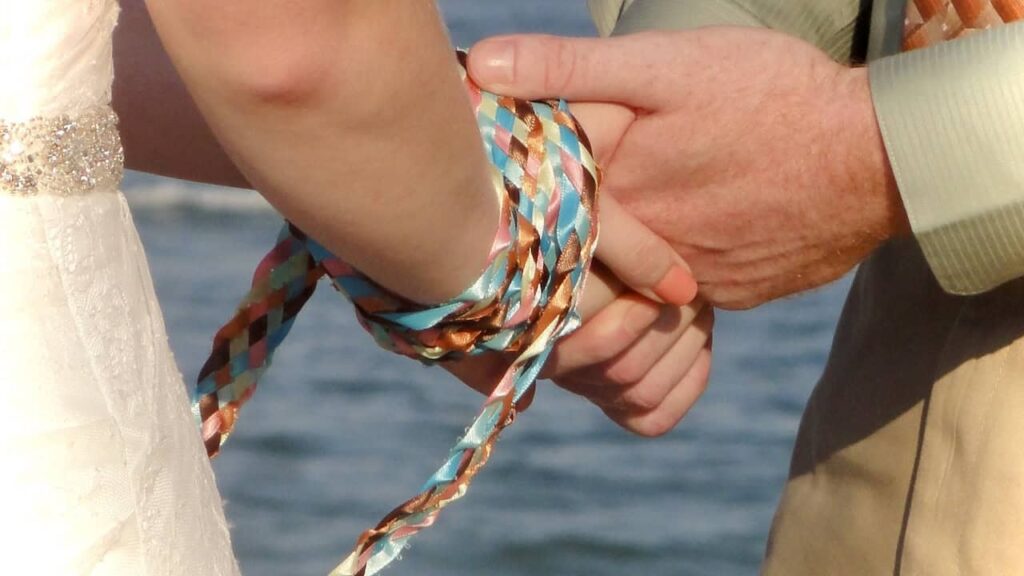
Handfasting: Tying the Knot
In many cultural wedding traditions, European rituals blend symbolism with simplicity. Scottish handfasting turns vows into a physical act, as a celebrant or loved one ties a ribbon or cord around the couple’s joined hands. This gesture, often called “tying the knot,” can include multiple cords to represent the joining of families. Because it is simple and non-sacramental, many couples easily adapt it into modern ceremonies and keep the cord as a meaningful keepsake.
Blessings and Serenades: Words and Anticipation
Meanwhile, Irish weddings often include spoken blessings or toasts, delivered during the ceremony or as a transition between key moments. These words add warmth and memorability, creating a pause that guests remember. In parts of Italy, tradition takes a more theatrical turn with the serenade, where the groom or loved ones sing outside the bride’s home before the wedding. As a result, anticipation builds into a shared, emotional experience.
Polterabend: Breaking and Building Together
In Germany, polterabend combines folklore with practical meaning. Friends gather to break porcelain items, as tradition suggests the noise drives away bad luck. Then, the couple cleans the mess together, symbolizing teamwork and resilience. Typically held the night before the wedding, this ritual reminds everyone that challenges will come, but they can be faced side by side. For safety, couples often provide gloves, brooms, and a clear “no glass” rule.
Hawaii: Aloha, Welcome, and Nature-Rooted Symbols (Lei + Pū + Oli)

Lei Exchange: A Gesture of Love and Acceptance
In many cultural wedding traditions, Hawaiian ceremonies begin with a lei exchange, a gesture of welcome, love, and mutual acceptance. The couple places leis on each other, creating a moment that feels personal and grounded. Importantly, the materials matter; flower leis carry different meanings than leaf leis, and maile holds special significance in many traditions. Through touch and fragrance, the ritual connects the couple to the present moment.
Pū and Oli: Setting Intention
In addition, some ceremonies open with the blowing of the pū (conch shell), followed by an oli aloha chant. These elements call attention, honor ancestors, and set a clear intention for the ceremony. However, they are not interchangeable “island aesthetics.” Instead, they belong to living Hawaiian cultural practices, guided by language, rhythm, and protocol.
How to Adapt It Respectfully
If you have a Hawaiian connection, work with a cultural practitioner or officiant to choose appropriate elements and follow correct protocols. Otherwise, focus on the lei exchange and avoid using chants or the conch shell without guidance. Order leis from local makers, learn their meanings, and include a brief explanation in your program. By doing so, you honor the spirit of aloha while keeping the experience authentic and respectful.
The “No-Overload” Formula (So Your Wedding Feels Curated, Not Crowded)
To have everything coherent, decide on three anchors and assign to each of them a sentence-long description:
✓ Tea respect moment (symbol of ceremony), unity cord, canopy-as-home, signed values
✓ One family-honor experience (organized blessings, parental tributes, elder recognition)
✓ One celebration ignition (processional music, cultural dance set, a communal lift/circle moment)
That is enough to make your wedding feel worldly-inspired and emotionally polished. When you arrange traditions like a story, your wedding feels purposeful and memorable.
Read more: Top 10 Honeymoon Destinations for Newlyweds to Unwind and Celebrate Love
Concluding Remarks: Let Tradition Add Meaning, Not Pressure
Tradition must never be like a checklist; it must be like a heartbeat. The best wedding events are not the ones that make the most noise; they are the ones that make you feel connected, happy, proud, and grounded. Gathering tea to celebrate your parents, binding hands to seal your vows, dancing your heritage into the night, make every ritual mean something about you. Now ask yourself, what do you wish your guests to remember: your decor, or your meaning? Choose one tradition today, discuss it with your partner, and begin to plan a celebration that is just for you.
Craving more wanderlust? The Broad Life unveils epic travel books to fuel your next adventure. These aren’t just guides—they’re tales of authors exploring new worlds, uncovering hidden gems, and soaking up wild cultures. Dive into the best travel reads now!
> READ MORE: THE BEST TRAVEL BOOKS OF ALL TIME
Hey, Plan Your Trip Like a Pro With These Resources!Pack Smart
Don't leave without essentials! Grab your Travel Medicines and a handy Travel Kit, must-have for any adventure. Visa Made Easy
Need a visa fast? IVISA offers quick, secured services with almost zero rejection risk. Get yours sorted now!
Find Flights & Rides
Score deals with my Find Cheap Flights Guide.
Or book buses, trains, and more on 12Go - easy travel to any spots!
Book Your Stay
I swear by Booking.com for hotels. Want a cozy vibe? Snag Free Airbnb Credits for homestays - click to save! Driving Your Way
Love road trips? Compare prices and snag steals on Discover Cars for a fun, flexible ride.
Stay Protected
Post-COVID, Travel Insurance is a game-changer. Shield yourself from health hiccups - get covered today!
“PIN IT” NOW to Save these cultural wedding traditions for inspiration and create a meaningful wedding story


The Broad Life
The Broad Life is a travel blog with guides, stories, and reviews to inspire people to explore the world and live a more interesting, experience, and adventurous life.




Leave a Reply