
Japan, IN FACT, Has No Official Capital City
Truly, Tokyo city is often mistaken for the capital of Japan. However, this is only an unconfirmed capital; the country does not actually have an official one.
Why Tokyo isn’t the Capital City of Japan?
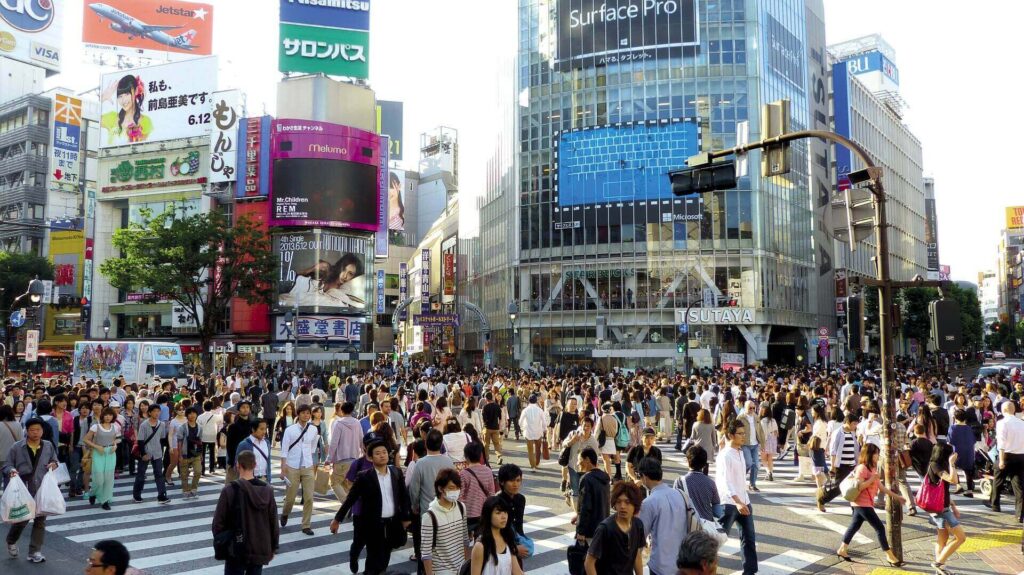
The reason is that, in Japan, the residence of the Emperor is considered the capital city. Based on the Tokyo Metropolitan Government (n.d.), for a long time before 1868, the Emperor’s residence was located in Kyoto, which was the formal capital city of Japan. After 1868, the Emperor, as well as the country’s government, resided in Edo, which is later known as Tokyo Metropolis. As a result, Tokyo became the capital city of the nation.
In 1950, the Japanese government made a decision to locate the capital in this city. However, a few years later, the leaders took back the decision. Therefore, Japan has no official capital city so far. Furthermore, “Capital of Japan’s Law and Custom” (Wikipedia 2021) states that “While no laws have designated Tokyo as the Japanese capital, many laws have defined a “capital area” (首都圏, shuto-ken) that incorporates Tokyo”.
The Land of the Rising Sun
According to World Atlas, Japan is a country in East Asia. The country has an area of more than 377,000 km2 and a population of more than 126 million people. Also, Japan consists of about 6,852 large and small islands, of which 4 main islands are Honshu, Hokkaido, Kyushu, and Shikoku. Indeed, the nation’s territory is isolated by the sea, with no land border with any country.
People call Japan by many different names. There are some of the most well-known names are “The Land of the Rising Sun”, Fusang, “The Land of Cherry Blossoms”, or “The Land of Tea Ceremony”, etc. In it, Fusang, or Fusō, is one of the popular names when referring to Japan. This nickname is called after the name of a tree species.
Following the name “The Land of the Rising Sun”, the Japan flag has a rectangular shape with two main colors: a white background with a large red circle, which symbolizes the Sun, in the center.
What is There in Japan to Discover
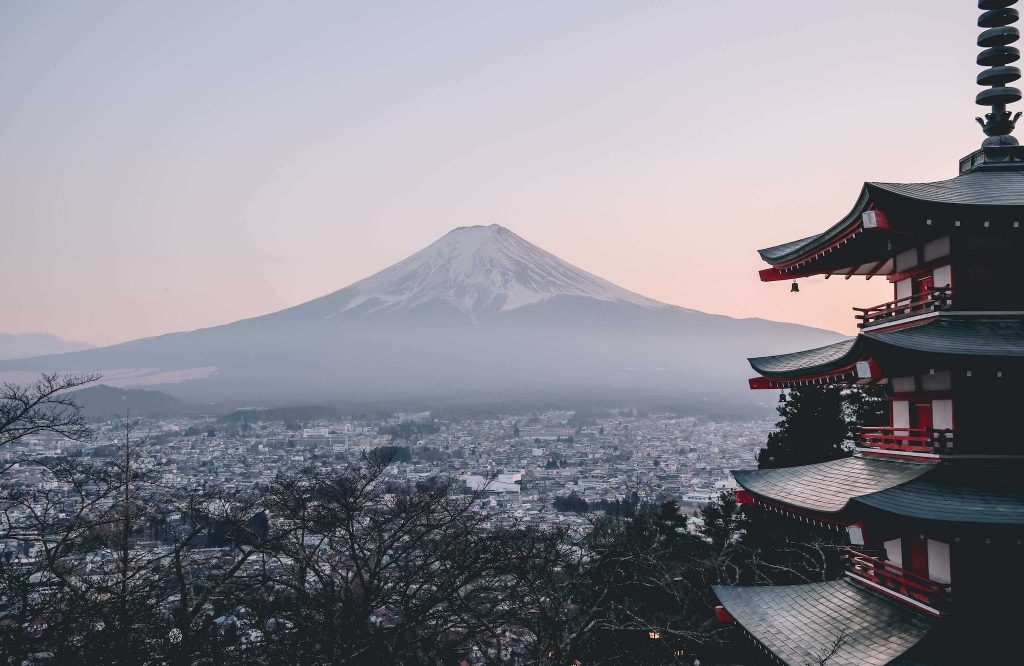
Definitely, it’s Mount Fuji coming first. It is the tallest mountain in Japan and is also a famous symbol of this country. Moreover, this mountain is often the subject of paintings and photography, art, literature, and music. Alongside, this is one of the “Three Holy Mountains” of Japan, along with Mount Takao and Mount Haku.
Besides that, there are destinations in Japan, particularly in Tokyo that travelers can visit:
The current monetary unit of Japan is the Yen. Actually, it is the third most traded currency on the foreign exchange market, after the US dollar and Euro. Thus, don’t forget to exchange some for your trip to the country.
Read more: 20 Things to Know Before You Travel to Japan
Frequently Asked Questions
Why did Japan have two capitals?
Japan did not officially maintain two capitals at the same time. Rather, Kyoto was the traditional capital, while Tokyo became the center of government after the Meiji Restoration in the late 19th century. The transfer of the Imperial Court and government functions to Tokyo created the historical ambiguity surrounding the capital city of Japan.
Why is Kyoto no longer the capital of Japan?
Kyoto stopped being Japan’s political center when the Meiji government moved the Emperor and major government functions to Tokyo in the 1860s. Today, Kyoto remains Japan’s former capital and an important cultural and historical city, but Tokyo is the country’s de facto capital.
Was Osaka a capital of Japan?
Yes. Osaka, then known as Naniwa, served as a capital of Japan during the 7th century and again briefly in the 8th century. Emperor Kōtoku established Naniwa as the capital in 645, making modern-day Osaka one of Japan’s historic capital cities.
What is the real capital of Japan?
Tokyo is the de facto capital of Japan and the seat of the Emperor, national government, and major government institutions. Interestingly, Japan has no single law explicitly declaring Tokyo the capital, which is why the question of the official capital city of Japan is technically more complicated than it first appears.
What are the top 3 major cities in Japan?
For Japan travel, Tokyo, Osaka, and Yokohama are among the country’s biggest and most important cities. By city population, Tokyo’s 23 wards are the largest, followed by Yokohama and Osaka; each offers a distinctly different experience, from Tokyo’s modern attractions to Osaka’s food culture and Yokohama’s waterfront.
Reference
- Tokyo Metropolitan Government, n.d., TOKYO’S HISTORY, GEOGRAPHY, AND POPULATION. [online] https://www.metro.tokyo.lg.jp/ENGLISH/ABOUT/HISTORY/history01.htm [Accessed 2 Apr. 2021].
- Wikipedia, updated Mar 2021, Capital of Japan. [online] https://en.wikipedia.org/wiki/Capital_of_Japan [Accessed 2 Apr. 2021].
- WorldAtlas, updated Feb 2021, Maps of Japan. [online] https://www.worldatlas.com/maps/japan [Accessed 2 Apr. 2021].
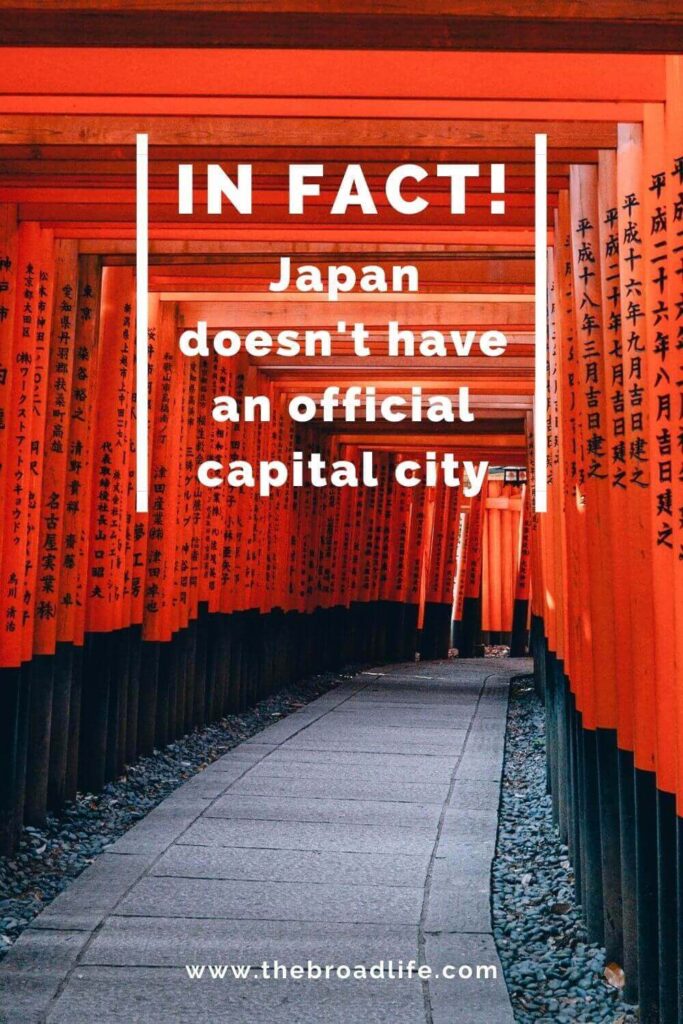
PIN THIS POST NOW TO SAVE THE INTERESTING FACTS OF JAPAN

Khoi Nguyen
Khoi Nguyen builds The Broad Life with a desire to inspire people go exploring the world and live a more interesting, experience, and adventurous life. This blog shares the stories, pictures, and experiences at destinations where he has traveled to.
16 Comments
-
-
Khoi Nguyen
Yeah, it’s the truth. How do you feel about your coming Japan trip after knowing that info?
-
-
Kuntala
This was so interesting and informative. I had no idea about the capital or how the name Land of the Rising Sun came to be.
-
Khoi Nguyen
Know you do. Don’t forget to read other interesting facts in my [IN FACT] series.
-
-
MARINA
We learn as long as we live. Great facts, thank you. My father used to work in Japan, and he was very impressed with the people and their culture. I hope I will go there some day too
-
Khoi Nguyen
Yeah that a great country to spend even a year exploring everything.
-
-
-
Khoi Nguyen
Actually, it does, just an unofficial one.
I hope the post conveys the right info.
-
-
Ivan Jose
Now, that is something about Japan that I didn’t know. Anyway, it’s such a beautiful country. We were planning to go to Japan but then the pandemic broke.
-
Khoi Nguyen
I’m so sure that your trip to Japan after the pandemic will be more enjoyable with the facts you knew.
-
-
Monidipa
I have always wished to visit Japan. Beause I love that country, it is so organised but I was not aware that it doesnt have capital city.
-
Khoi Nguyen
Actually, Tokyo is considered as its capital, just an unconfirmed one.
-
-
Rosey
There are some interesting facts about Japan here. My son was going to go for a field trip years ago but a tsunami hit and the trip was cancelled. I was glad the school hadn’t already gone.
-
Khoi Nguyen
So lucky your son was!
I believe you and your son can have an enjoyable trip to Japan after the pandemic ends. It will be ok to travel to the country at that time.
-
-
Arūnas
So interesting – I did not know that Japan has no official capital city. I have never been to this Eastern Asia country, it would be exciting to visit Japan someday.
-
Khoi Nguyen
You will love Japan for sure after traveling there. The country is very beautiful!
-




Brianne
This was such an interesting read. I’ve always wanted to visit Japan. I had no idea that the captial was wherever the emperor was.