20 Famous Buildings Around the World: Fascinating Facts
Do you feel more excited about visiting a destination when you know its hidden stories? If your answer is yes, then we’re sharing the same feeling! These famous buildings around the world are more than architectural landmarks. Each has fascinating facts, surprising secrets, and stories that can make your trip even more enjoyable.
From London’s distinctive Gherkin to Dubai’s record-breaking Burj Khalifa, these iconic buildings showcase remarkable architecture, history, and human creativity. Let’s discover 20 world-famous buildings and the interesting facts that make them worth exploring.
Quick List of 20 Famous Buildings Around the World
Here is a quick overview of 20 famous buildings around the world, their locations, and what makes each landmark special.
| No. | Famous Building | Location | What Makes It Special |
|---|---|---|---|
| 1 | The Gherkin | London, England | Distinctive cucumber-shaped design |
| 2 | Eiffel Tower | Paris, France | Iconic iron tower and Gustave Eiffel’s private apartment |
| 3 | La Sagrada Família | Barcelona, Spain | Nature-inspired architecture and ongoing construction |
| 4 | Sheikh Zayed Grand Mosque | Abu Dhabi, UAE | White marble, grand domes, and an enormous hand-knotted carpet |
| 5 | Burj Khalifa | Dubai, UAE | The world’s tallest building |
| 6 | Statue of Liberty | New York, USA | A global symbol of freedom and its inaccessible torch |
| 7 | Sydney Opera House | Sydney, Australia | Sail-like roof shells and world-class performances |
| 8 | Taj Mahal | Agra, India | White marble, intricate stone inlay, and a romantic history |
| 9 | Colosseum | Rome, Italy | Ancient Roman engineering and underground arena spaces |
| 10 | Empire State Building | New York, USA | Art Deco architecture and panoramic observation decks |
| 11 | Petronas Twin Towers | Kuala Lumpur, Malaysia | Twin skyscrapers connected by a skybridge |
| 12 | Lotus Temple | New Delhi, India | A striking design inspired by a blooming lotus |
| 13 | Leaning Tower of Pisa | Pisa, Italy | Its famous tilt caused by unstable ground |
| 14 | Palace of Versailles | Versailles, France | The lavish Hall of Mirrors and royal history |
| 15 | Hagia Sophia | Istanbul, Türkiye | A monumental dome and layers of religious history |
| 16 | CN Tower | Toronto, Canada | A towering landmark with panoramic views and thrilling adventures. |
| 17 | One World Trade Center | New York, USA | Its symbolic 1,776-foot architectural height |
| 18 | Marina Bay Sands | Singapore | Three towers topped by the distinctive SkyPark |
| 19 | Parthenon | Athens, Greece | Ancient Greek architecture and subtle optical refinements |
| 20 | Taipei 101 | Taipei, Taiwan | A bamboo-inspired skyscraper with a giant tuned mass damper |
The 20 Famous Buildings in the World and Their Interesting Facts
1. The Gherkin – London, England
The Gherkin Tower, officially known as 30 St Mary Axe, is approximately 180 metres tall. It is one of London’s most recognizable landmarks. The building was completed in 2003 and primarily accommodates offices, alongside other commercial facilities.

The Gherkin earned its nickname because its distinctive curved shape resembles a ‘cucumber’. Its unusual design is not just for appearance, as the building’s form also helps manage wind around the structure.
Its glass exterior creates a striking appearance against London’s historic skyline. Unlike conventional rectangular office towers, the Gherkin narrows toward the top and features a rounded profile that makes it easy to recognize.
- Interesting fact: Nearly 7,500 glass panels, enough to cover five football fields, were used to construct the building. Despite its curved appearance, the building’s exterior uses predominantly flat glass panels arranged to create its distinctive shape. Only a piece of curved glass is used on the dome at the top.
- Travel tip: You can admire the Gherkin while exploring London’s financial district. Access to the interior is generally subject to building access arrangements, so check before planning a visit.
Read more: Top 10 London Attractions: A Guide to the Best of the City
2. Eiffel Tower – Paris, France
As one of the world’s most recognizable and famous buildings, the Eiffel Tower has welcomed more than 300 million visitors since it opened in 1889. It was once the tallest man-made tower in the world and weighed more than 10,000 tons. Despite the millions of visitors who flock here each year, the symbol of Paris City still holds some surprises. For example, most visitors do not know that the tower has a small room at the top.

The designer of this iconic work is Gustave Eiffel. He also built a complete room under the spire with wooden furniture, oil paintings, and patterned wallpaper. After years of restrictions, visitors who purchase tickets to the top of the tower can now see the room from behind windows. Most of the furniture here is still preserved after hundreds of years, with effigies of Eiffel and Edison placed inside.
- Interesting fact: The Eiffel Tower was originally intended to stand for only 20 years, but its usefulness for scientific experiments and radio communications helped secure its future.
- Travel tip: Book tickets in advance and check summit access before visiting.
3. La Sagrada Família – Barcelona, Spain
La Sagrada Família Roman Catholic Church is a very familiar place in Barcelona and one of the most famous buildings in the world. The massive design of the building can be seen from many parts of the city. Around 3 million tourists visit this UNESCO World Heritage Site each year. Previously, architect Antoni Gaudi‘s masterpiece began construction in 1882 and remains unfinished. The work is estimated to be completed in 2026, coinciding with the 100th anniversary of Antoni Gaudi’s death. However, this deadline may be postponed due to the impact of Covid-19.

While most visitors usually climb the steps to visit the structure, La Sagrada Família has a series of secret elevators that can take you straight to the top. This is an impressive feat considering the narrowness of the towers, not to mention the fact that the structure is not built in a straight line.
- Interesting fact: Gaudí devoted much of his later life to the basilica, and he was buried in its crypt after his death in 1926.
- Travel tip: Reserve skip-the-line tickets in advance. Tower access may depend on ticket type, weather, and operating conditions.
4. Sheikh Zayed Mosque – Abu Dhabi, UAE
Abu Dhabi’s Sheikh Zayed Mosque is one of the largest mosques in the world. The great structure can accommodate more than 40,000 worshippers. It has more than 1,000 pillars and is decorated with 24-carat gold chandeliers. Nevertheless, amid that overwhelming interior, the most luxurious element of the building lies on the floor.

Especially, Sheikh Zayed Mosque has the largest hand-woven carpet in the world. It took 1,200 workers 18 months and 38 tons of cotton and wool to create it. The tapestry is made in Iran and placed in the main prayer room of the church, measuring 5,630 square meters.
- Interesting fact: The mosque’s design includes 82 domes of varying sizes, making its roofline one of its most distinctive features.
- Travel tip: Check the info for visitor arrangements, opening hours, and dress requirements. Book the tour in advance. Remember that this is an active place of worship.
Read more: 11 UAE Facts That You Will Find Very Interesting
5. Burj Khalifa – Dubai, UAE
At 828 meters tall, the Burj Khalifa Tower holds the world record for not only the tallest building but also the tallest man-made structure, the tallest free-standing structure, and the tallest outdoor observatory. This marvelous, most recognizable landmark is, of course, one of Dubai’s best attractions.
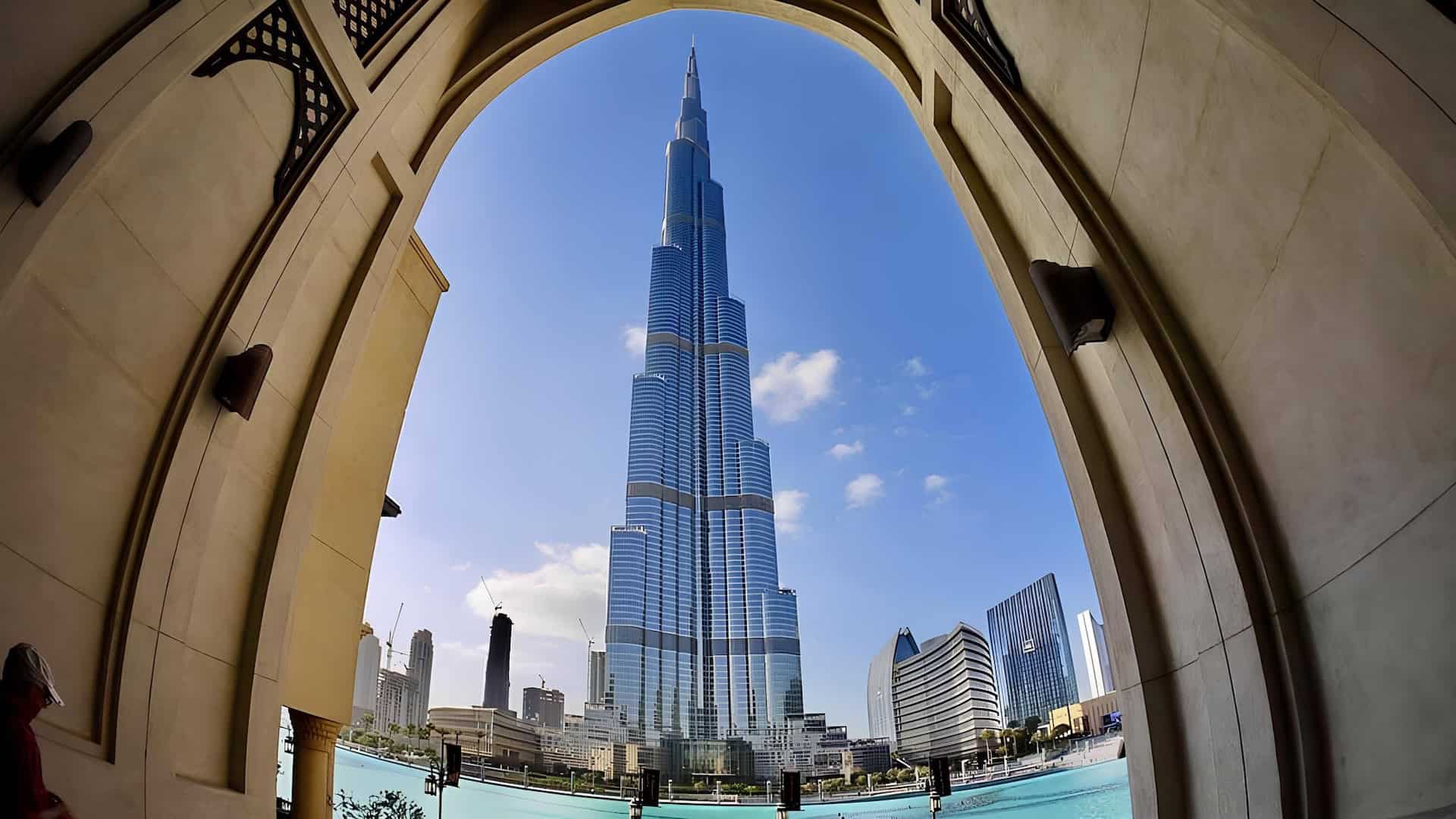
The building combines residential apartments, offices, hospitality facilities, and observation experiences. Its stepped design draws inspiration from regional architectural forms and helps create a slender profile as the tower rises. Especially, this record-holding building houses a private library. In fact, it’s the tallest library in the world. This quiet space is located on the 123rd floor of the Burj Khalifa.
Visitors can purchase tickets for observation decks that offer sweeping views of Dubai, from the surrounding desert to the Arabian Gulf. The building’s height and engineering make it a defining example of modern skyscraper design.
- Interesting fact: The Burj Khalifa’s height is more than twice that of the Empire State Building’s original architectural height.
- Travel tip: Book observation-deck tickets in advance through its authorized attraction operator, and consider sunset slots if you want to see the city in daylight and after dark.
Read more: 12 Reasons to Visit Dubai
6. Statue of Liberty – New York, USA
A gift from France to the United States in 1886, the Statue of Liberty is recognized around the world as a symbol of freedom. Designed by sculptor Frédéric Auguste Bartholdi, with an internal framework engineered by Gustave Eiffel, the monument stands on Liberty Island in New York Harbor.

The statue is over 93 meters tall and attracts about 3.5 million people each year. Its copper exterior has developed its familiar green patina over time. Visitors can explore the grounds, museum, and pedestal, while crown access requires a separate reservation and is subject to availability.
A little-known fact about the Statue of Liberty is that there is an observatory inside the torch, at the highest point of the statue. Yet, this area has been restricted to visitors since 1916 after German agents blew up an ammunition depot near the area and damaged the torch. Although repaired, the torch has never been reopened to the public.
- Interesting fact: The statue’s tablet bears the date July 4, 1776, written in Roman numerals to commemorate American independence.
- Travel tip: Make sure to reserve the Statue of Liberty and Ellis Island in advance for ferry and access entry.
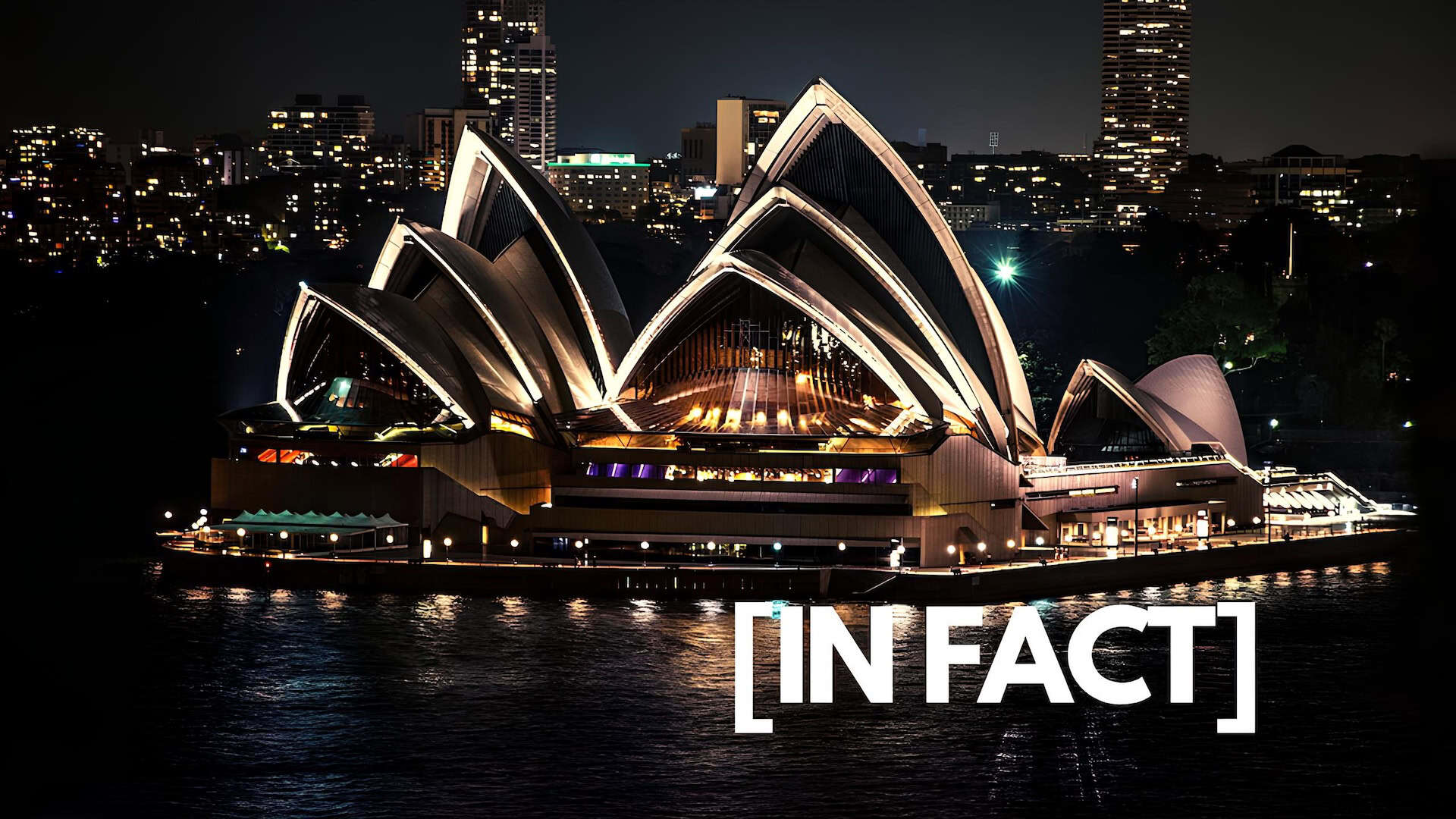
7. Sydney Opera House – Sydney, Australia
The Sydney Opera House in Sydney Harbour is one of Australia’s most famous landmarks. Also, it is on the UNESCO World Heritage List. The building was opened in 1973, with an appearance resembling the sails of a yacht.

Designed by Danish architect Jørn Utzon, the building is celebrated for its expressive roof shells and waterfront setting. It hosts opera, dance, theatre, concerts, and other performances throughout the year.
What surprises people about the Sydney Opera House is that it’s more than just an opera venue. Particularly, there is a “secret” nightclub, The Studio, for dance nights, theatrical performances, and underground music performances. This place is often used as part of the annual Vivid Live contemporary music festival.
- Interesting fact: The Sydney Opera House became a UNESCO World Heritage Site in 2007, recognizing its significance as a masterpiece of twentieth-century architecture.
- Travel tip: You can join a guided tour or attend a performance. Check the official Sydney Opera House website for current events and ticket availability.
Read more: 3-Day Sydney Itinerary with Kids
8. Taj Mahal, Agra, India
The Taj Mahal is one of the world’s most famous buildings. Mughal emperor Shah Jahan commissioned this white-marble mausoleum in memory of his wife, Mumtaz Mahal. Construction began around 1632, and workers spent roughly 2 decades completing the main complex.
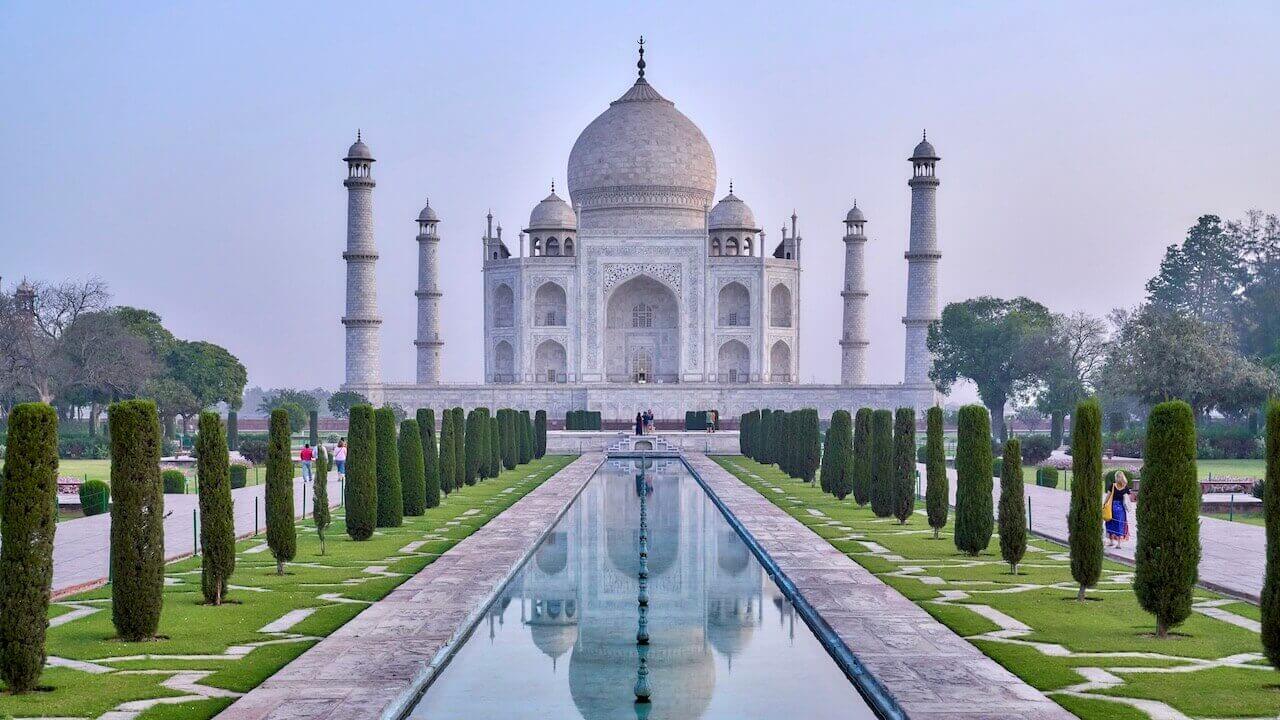
The Taj Mahal’s symmetrical design, elegant dome, and intricate stone inlay make it a masterpiece of Mughal architecture. In addition, its gardens and reflecting pools create beautiful views of the monument. The marble can even appear pinkish at sunrise and golden under certain evening light.
- Interesting fact: Four minarets surround the main mausoleum. Builders designed them with a slight outward inclination, which helps protect the central structure if an earthquake causes them to fall.
- Travel tip: Visit Taj Mahal early in the morning for softer light and cooler temperatures. Check the official visitor information before planning your trip.
9. Colosseum, Rome, Italy
The Colosseum is one of the most recognizable landmarks of ancient Rome. Emperor Vespasian began construction around AD 70–72, and his son Titus inaugurated the amphitheatre in AD 80. The enormous structure once hosted gladiatorial contests, animal hunts, and other public spectacles.

Its elliptical design measures approximately 189 metres by 156 metres. Moreover, its complex network of entrances, corridors, and stairways helped manage large crowds. Beneath the arena, workers and animals waited in underground chambers before spectacles began.
- Interesting fact: The Colosseum could accommodate tens of thousands of spectators. Its ingenious circulation system demonstrates how Roman engineers managed crowds on a remarkable scale.
There are many more facts about the Colosseum that you will find interesting! - Travel tip: Consider booking a guided Colosseum tour to learn more about the arena and its underground spaces.
10. Empire State Building, New York, USA
The Empire State Building is one of New York City’s most iconic skyscrapers. Completed in 1931, it rises 102 floors and showcases the distinctive Art Deco style that defined much of the era’s architecture.
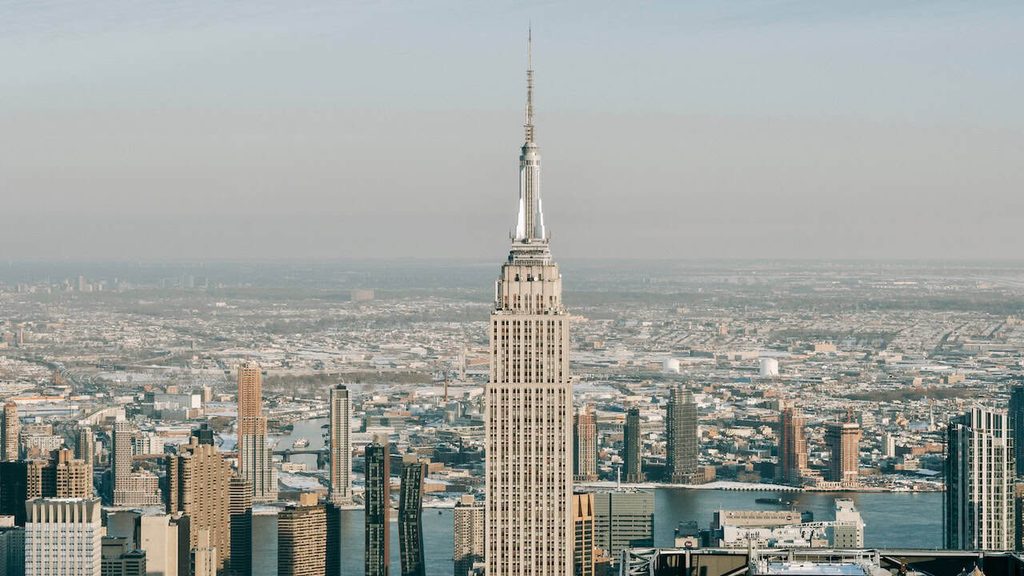
At its opening, the building became the world’s tallest building, holding that title until 1970. Today, its observation decks attract visitors who want panoramic views of Manhattan, Central Park, and the surrounding skyline.
- Interesting fact: Construction took approximately 410 days, an impressive achievement for a skyscraper of its size during the early 1930s.
- Travel tip: Compare and reserve your observation-deck ticket in advance. If possible, choose a time that lets you see New York in daylight and after dark.
11. Petronas Twin Towers, Kuala Lumpur, Malaysia
The Petronas Twin Towers dominate Kuala Lumpur’s skyline. Completed in 1998, these twin skyscrapers each rise 88 floors and reach 452 metres, including their spires. Their distinctive design incorporates geometric patterns inspired by Islamic art.
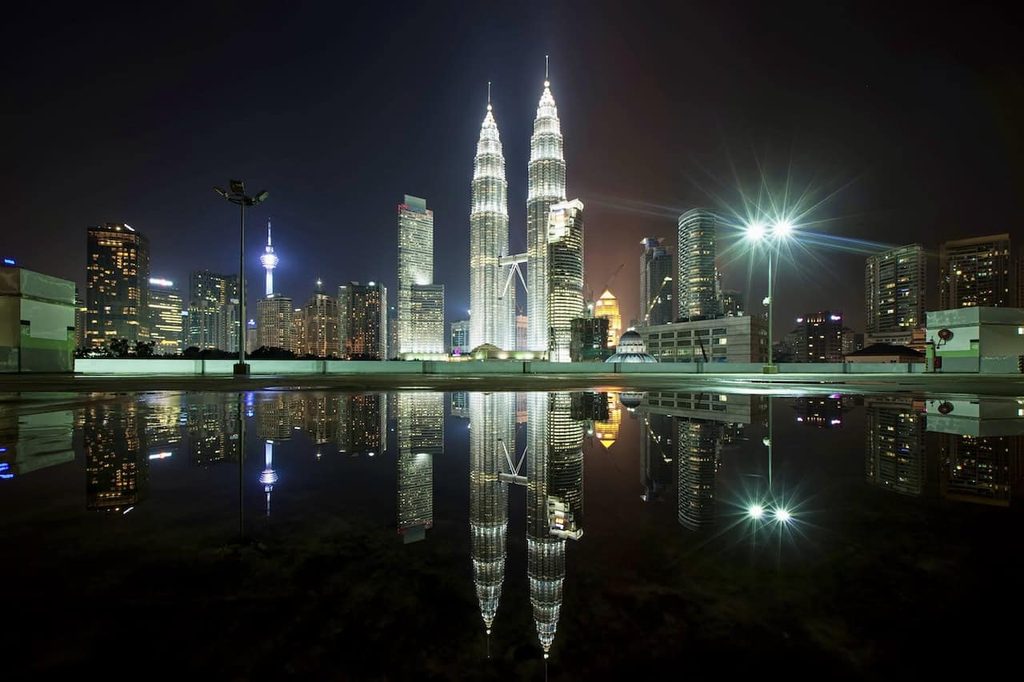
One of the towers’ most recognizable features is the skybridge connecting them at levels 41 and 42. In addition, the surrounding Kuala Lumpur City Centre area offers parks, shopping, and other attractions, making the towers a convenient stop on a city itinerary.
- Interesting fact: The Petronas Twin Towers held the title of the world’s tallest buildings from 1998 until 2004. They remain the world’s tallest twin towers.
- Travel tip: Book a Kuala Lumpur day tour with different sights, which include the Petronas Towers, to optimize your travel budget and time. Check the official website for current access times and visitor rules.
12. Lotus Temple, New Delhi, India
The Lotus Temple is one of New Delhi’s most distinctive architectural landmarks. Completed in 1986, this Bahá’í House of Worship features 27 marble-clad petals arranged in clusters to resemble a blooming lotus flower.
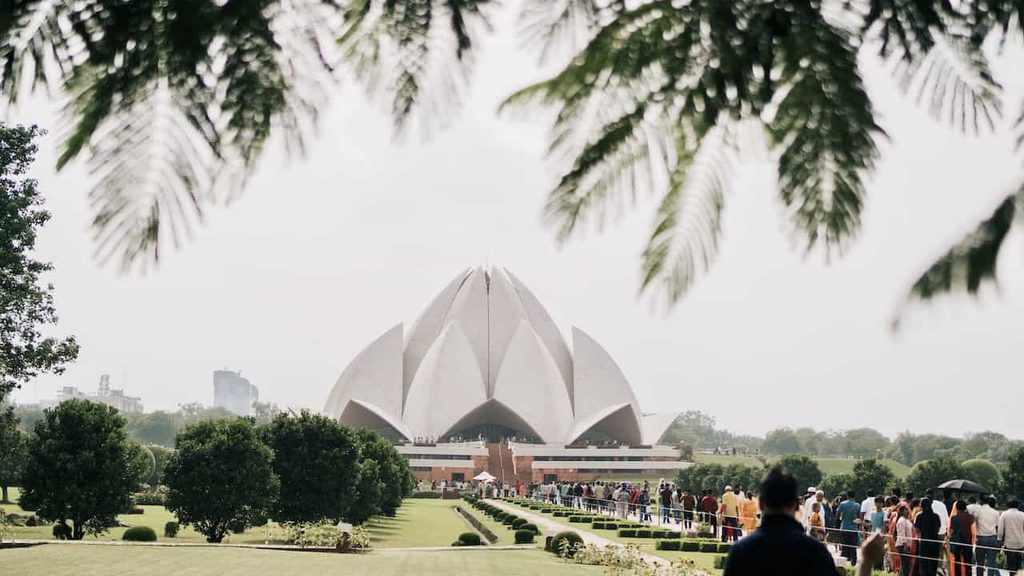
The design creates a peaceful space for prayer and reflection. Furthermore, the temple welcomes visitors from different religious backgrounds, reflecting the Bahá’í principle of the unity of humanity.
- Interesting fact: The 27 petals form nine sides, reflecting the importance of the number nine in Bahá’í architecture and symbolism.
- Travel tip: Check the official visitor information before arriving. The temple is a place of worship, so keep your visit respectful and follow local guidelines.
13. Leaning Tower of Pisa, Pisa, Italy
The Leaning Tower of Pisa is famous for its unmistakable tilt. Construction began in 1173, but the soft ground beneath its shallow foundations caused the tower to lean before builders completed it. Work continued over several phases across almost 2 centuries.
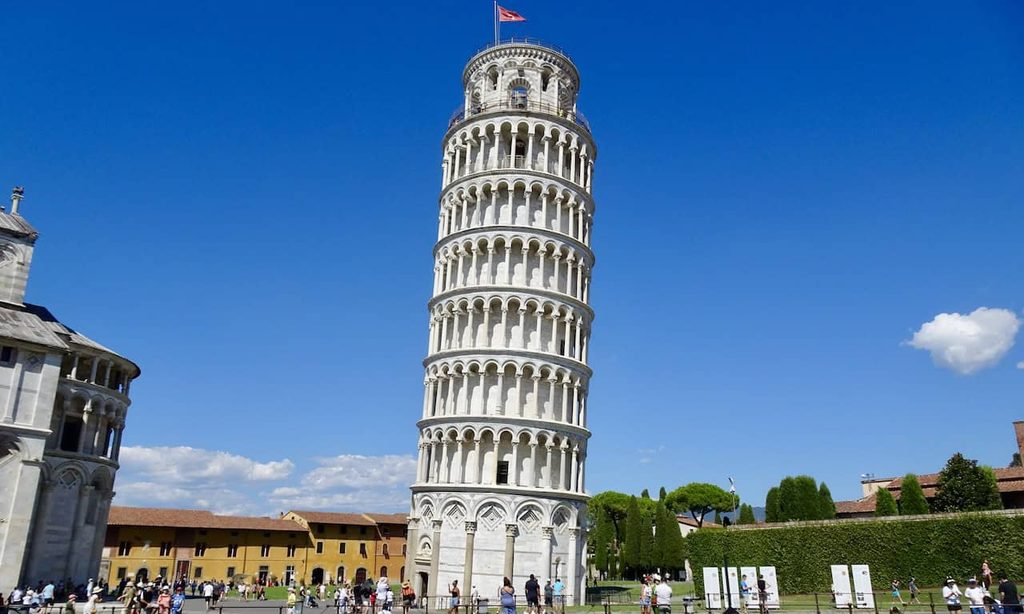
The white-marble bell tower stands in the Piazza dei Miracoli beside Pisa Cathedral. Over time, engineers introduced stabilization measures to reduce its tilt and protect the structure.
- Interesting fact: The tower’s lean began during construction, not because its builders intended to create a tilted landmark. Its distinctive angle ultimately made it one of the world’s most recognizable buildings.
- Travel tip: Visitors can climb the tower with a timed ticket. Reserve in advance, and check the official site for age restrictions, opening times, and access conditions.
14. Palace of Versailles, Versailles, France
The Palace of Versailles offers a glimpse into the grandeur of French royal life. King Louis XIV transformed the former hunting lodge into a magnificent royal residence during the 17th century. Its elaborate interiors, formal gardens, and fountains reflect the power and ambition of the French monarchy.
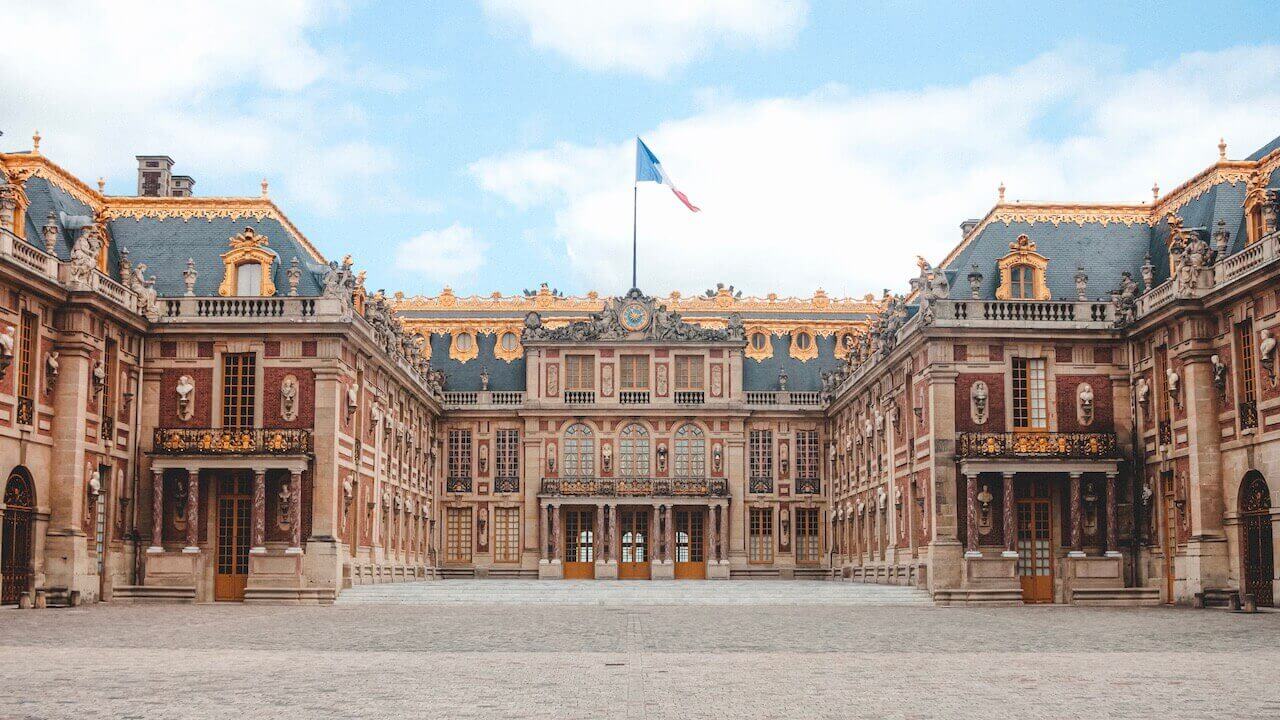
One of the palace’s most famous rooms is the Hall of Mirrors. It stretches for approximately 73 metres and features 17 mirrored arches opposite 17 windows overlooking the gardens.
- Interesting fact: In 1919, representatives signed the Treaty of Versailles in the Hall of Mirrors, marking the formal end of the state of war between Germany and the Allied Powers after World War I.
- Travel tip: Allow several hours to explore the palace and gardens. Check the official website for timed entry, seasonal garden events, and ticket options. Consider booking a guided tour to learn more about the Palace.
15. Hagia Sophia, Istanbul, Türkiye
Hagia Sophia is one of Istanbul’s most remarkable architectural landmarks. Emperor Justinian I commissioned the building, and architects completed it in AD 537. Its enormous dome and innovative structural design made it one of the most influential buildings of the Byzantine Empire.

Across nearly 1,500 years, Hagia Sophia has served as a Byzantine cathedral, an Ottoman mosque, a museum, and a mosque again. As a result, its interior reflects layers of religious and cultural history, including Christian mosaics and Islamic calligraphy.
- Interesting fact: The building’s dome spans approximately 31 metres, creating a vast interior space that impressed visitors for centuries.
- Travel tip: Check current visitor arrangements before your trip because access rules can change. As an active mosque, Hagia Sophia requires visitors to respect worshippers and follow applicable dress guidelines. Book a tour to make your trip full of experiences.
16. CN Tower, Toronto, Canada
The CN Tower is one of Canada’s most famous landmarks, rising above Toronto’s skyline with an impressive height of 553.33 metres (1,815 feet), including its antenna. When it opened in 1976, it became the world’s tallest freestanding structure, showcasing Canada’s engineering achievements.
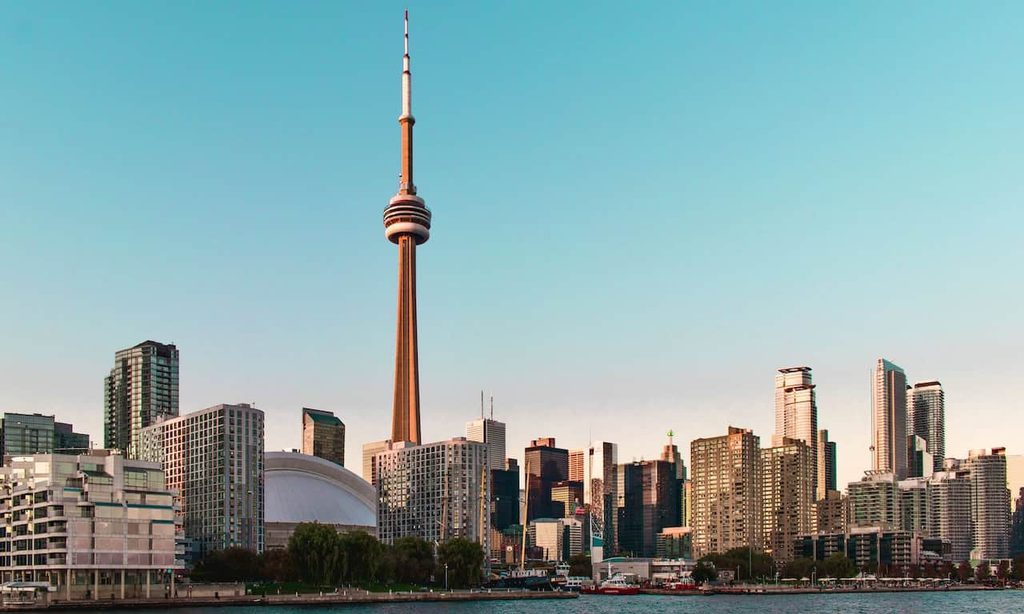
Construction began in February 1973, and workers completed the tower in April 1975. Since its opening, the CN Tower has welcomed visitors to its observation levels, where they can enjoy panoramic views of Toronto, Lake Ontario, and the surrounding landscape.
Today, the tower remains a major telecommunications hub and a popular tourist attraction. Visitors can explore the Glass Floor 342 metres (1,122 feet) above the ground or head to higher observation areas for even more spectacular views. Moreover, thrill-seekers can try EdgeWalk, an outdoor experience that lets them walk hands-free along the tower’s exterior ledge.
- Interesting fact: The CN Tower held the record as the world’s tallest freestanding structure for 34 years, until the completion of the Burj Khalifa in Dubai in 2010. Its height and distinctive silhouette continue to make it a defining feature of Toronto’s skyline.
- Travel tip: Visit on a clear day for the best views of Toronto and Lake Ontario. Book tickets in advance during busy periods, and check the official CN Tower website for current admission prices, opening hours, and EdgeWalk availability.
Read more: Montreal Road Trip Itinerary: 3 Perfect Days from Ontario via Ottawa
17. One World Trade Center, New York, USA
One World Trade Center is a defining feature of Lower Manhattan’s modern skyline. Built as part of the World Trade Center complex, the skyscraper represents rebuilding and renewal following the September 11 attacks.
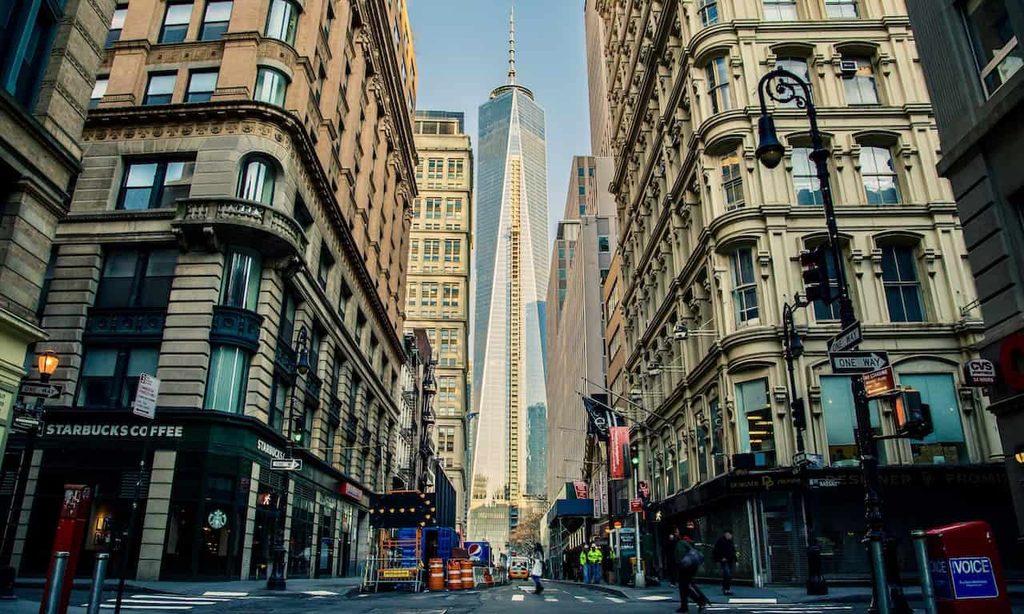
The tower reaches an architectural height of 1,776 feet, or approximately 541 metres. Designers chose that number to commemorate the year the United States declared independence. Its tapering form and reflective glass exterior create a distinctive profile above the city.
- Interesting fact: The building’s symbolic height links modern skyscraper design with a pivotal year in American history.
- Travel tip: Visit One World Observatory for panoramic views of New York. You can also explore the nearby 9/11 Memorial, allowing time for a respectful visit in the same tour.
18. Marina Bay Sands, Singapore
Marina Bay Sands is one of Singapore’s most recognizable modern buildings. The integrated resort features three hotel towers connected at the top by the dramatic Sands SkyPark, which resembles a ship resting above the skyline.

The complex includes a hotel, restaurants, shopping, entertainment venues, and the ArtScience Museum. Meanwhile, the surrounding waterfront provides excellent views of the towers, especially after sunset when the city lights illuminate the bay.
- Interesting fact: The SkyPark stretches across the tops of all three towers, creating a distinctive architectural feature visible from many parts of Marina Bay.
- Travel tip: You can book the e-ticket in advance for SkyPark access, dining options, and current ticket details. Not every area of the rooftop is open to every visitor.
Read more: 6 Days Itinerary in Singapore: A Guide to the Best Attractions and Activities
19. The Parthenon, Athens, Greece
The Parthenon stands on the Acropolis of Athens and remains one of the most influential examples of ancient Greek architecture. Built during the 5th century BC, it was dedicated to Athena, the city’s patron goddess.
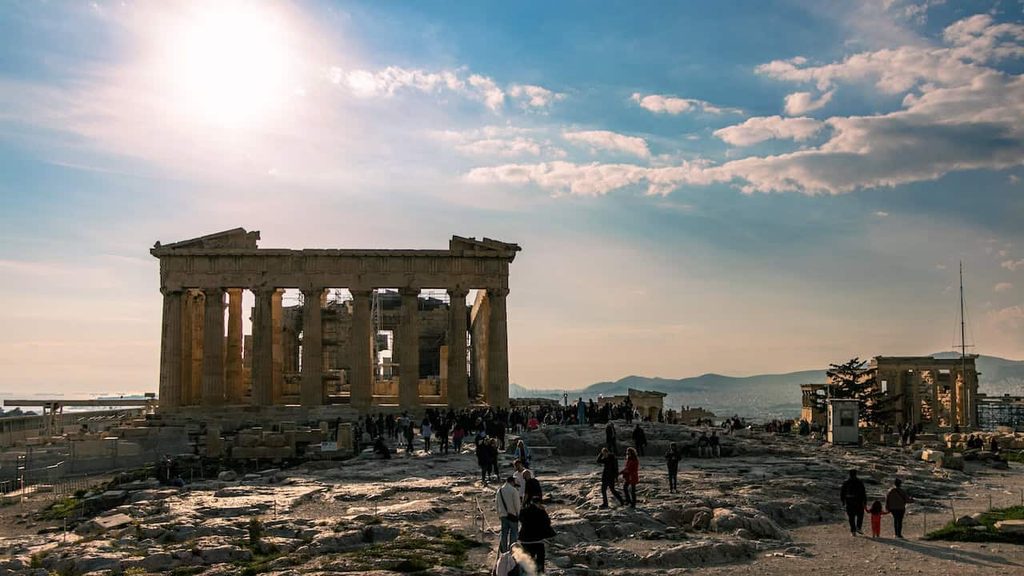
The temple features Doric columns and carefully calculated proportions. However, its architects introduced subtle curves and optical refinements rather than relying entirely on perfectly straight lines. These details helped create a harmonious appearance when people viewed the building from the ground.
- Interesting fact: The Parthenon has served different purposes over the centuries, including as a temple, a Christian church, and a mosque.
- Travel tip: Visit the Acropolis early in the day during hot weather, and check official site information for tickets, opening hours, and visitor restrictions. Book the guided tour to learn more about the places with interesting histories.
20. Taipei 101, Taipei, Taiwan
Taipei 101 is one of Taiwan’s most recognizable landmarks, standing 508 metres (1,667 feet) tall with 101 floors above ground. Opened in 2004, its distinctive bamboo-inspired design symbolizes strength, growth, and prosperity.

From 2004 to 2010, Taipei 101 held the title of the world’s tallest building until Dubai’s Burj Khalifa surpassed it. Today, visitors can explore its observation decks and enjoy panoramic views of Taipei’s skyline and surrounding mountains.
The tower also showcases impressive engineering. Its design includes a 660-tonne tuned mass damper, a giant suspended sphere that helps reduce building movement during strong winds and earthquakes.
- Interesting fact: Taipei 101’s massive golden damper helps stabilize the skyscraper, and visitors can see it from the observation area.
- Travel tip: Visit the observation deck around sunset for beautiful city views. Check the official Taipei 101 Observatory website for current ticket prices and opening hours.
Read more: Taipei to Alishan Itinerary 5 Days: A Perfect Taiwan Adventure
FAQs about the World’s Famous Buildings
What are the top 10 buildings in the world?
Some of the world’s most iconic buildings and architectural structures include the Eiffel Tower, Burj Khalifa, Taj Mahal, Colosseum, Sydney Opera House, Empire State Building, Petronas Twin Towers, Taipei 101, Sagrada Família, and Sheikh Zayed Grand Mosque. The ranking varies depending on architectural significance, height, history, and popularity.
Which is the world’s most famous building?
The Eiffel Tower in Paris, France, is widely considered one of the world’s most famous buildings. Its distinctive iron structure has become a global symbol of Paris and France, attracting visitors from around the world.
What are the top 10 oldest buildings in the world?
Some of the world’s oldest surviving buildings and monumental structures include Göbekli Tepe in Türkiye, the Cairn of Barnenez in France, the Knap of Howar in Scotland, the Ġgantija Temples in Malta, Newgrange in Ireland, Stonehenge in England, the Pyramid of Djoser in Egypt, the Great Pyramid of Giza, the Parthenon in Greece, and the Pantheon in Rome. Exact rankings vary because some lists include prehistoric monuments, ruins, and ceremonial structures.
What are the top 10 famous landmarks in the world?
Ten globally recognized landmarks include the Eiffel Tower in France, the Great Wall of China, the Taj Mahal in India, the Colosseum in Italy, the Statue of Liberty in the United States, the Great Pyramid of Giza in Egypt, Machu Picchu in Peru, the Sydney Opera House in Australia, Big Ben in the United Kingdom, and Christ the Redeemer in Brazil.
Which building is the best in the world?
There is no single best building in the world because architectural beauty and significance are subjective. The Burj Khalifa stands out for its height, the Taj Mahal for its intricate design and history, and the Sydney Opera House for its distinctive architecture. The best choice depends on whether you value engineering, beauty, cultural significance, or historical importance.
Are You Feeling More Interested in These Famous Buildings?
From ancient monuments to modern skyscrapers, these 20 famous buildings demonstrate how architecture can reflect a country’s history, culture, ambitions, and creativity. Each landmark tells a different story, whether through its engineering, artistic details, or role in shaping a city’s identity.
The next time you visit one of these destinations, take a moment to look beyond the famous façade. Knowing the stories behind these iconic buildings can make your travels more meaningful and help you appreciate the people and ideas that shaped them.
Which of these world-famous buildings would you most like to visit? Add it to your travel bucket list, and explore the destination guides on The Broad Life for more inspiration.
Note: Thank You for Supporting My Blog’s Journey!
I’m so grateful you’re here! This post includes affiliate links I love. Buying through them may earn me a small commission at no cost to you. Your support keeps this blog thriving, letting me share more adventures and tips with you. A huge thank you for choosing these links—it truly means the world to me and fuels my passion for creating!
Hey, Plan Your Trip Like a Pro With These Resources!Pack Smart
Don't leave without essentials! Grab your Travel Medicines and a handy Travel Kit, must-have for any adventure. Visa Made Easy
Need a visa fast? IVISA offers quick, secured services with almost zero rejection risk. Get yours sorted now!
Find Flights & Rides
Score deals with my Find Cheap Flights Guide.
Or book buses, trains, and more on 12Go - easy travel to any spots!
Book Your Stay
I swear by Booking.com for hotels. Want a cozy vibe? Snag Free Airbnb Credits for homestays - click to save! Driving Your Way
Love road trips? Compare prices and snag steals on Discover Cars for a fun, flexible ride.
Stay Protected
Post-COVID, Travel Insurance is a game-changer. Shield yourself from health hiccups - get covered today!
‘PIN IT’ NOW TO SAVE THE INTERESTING FACTS ABOUT THE FAMOUS BUILDINGS IN THE WORLD