
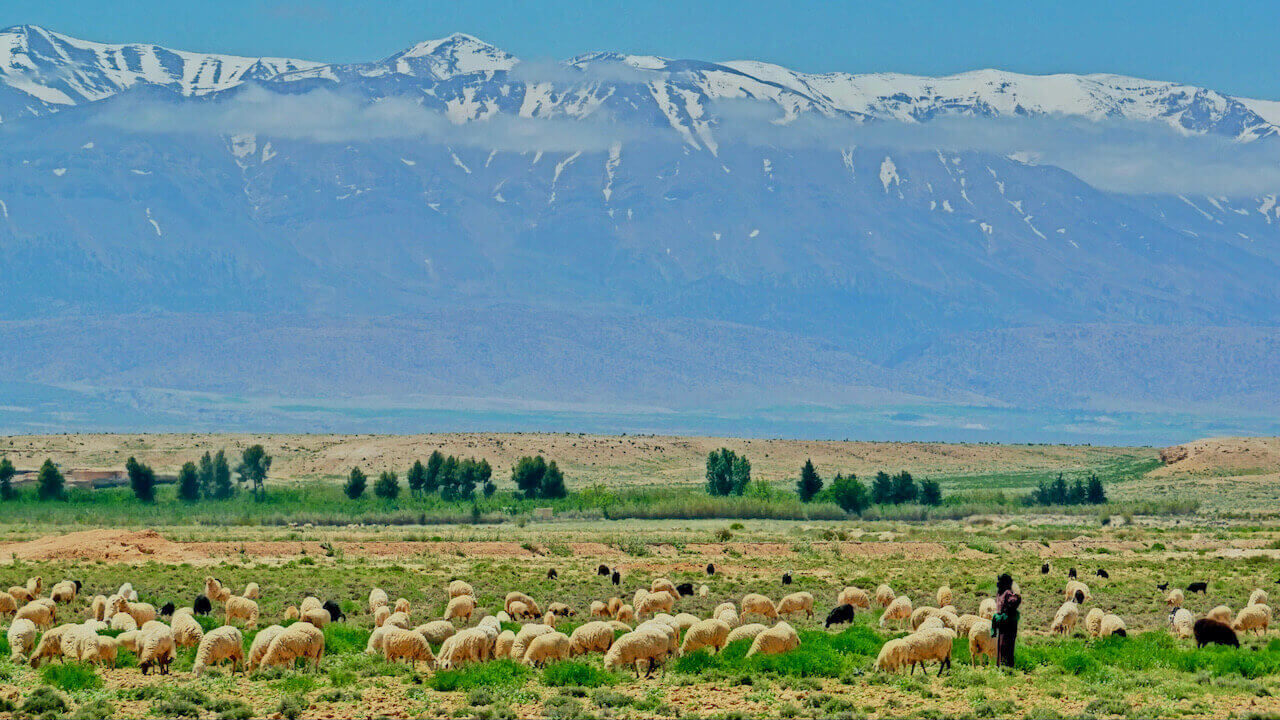
All About the Wonderful Atlas Mountains You Need to Know for Your Next Trip
Have you ever dreamed of standing among some of the world’s great mountain ranges? I have. I traveled through the Rocky Mountains when I was in Canada, and the 10 highest mountains in the world are already on my travel wishlist. But since reaching a summit is not always possible for me, simply stepping into a spectacular mountain landscape is enough to make me happy. Now, it is time to prepare for a trip to the Atlas Mountains.
Stretching across North Africa, this impressive mountain system offers much more than high peaks. It is a world of green valleys, rugged landscapes, forests, traditional villages, wildlife, and communities whose lives have long been connected to the mountains.
If the Atlas Mountains are also on your travel bucket list, let’s take a closer look at where they are, what makes each range different, and what you should know before your next trip.
Atlas Mountains at a Glance
The Atlas Mountains are a mountain system in the Maghreb region of North Africa. They extend through Morocco, Algeria, and Tunisia, creating a dramatic transition between Mediterranean and Atlantic landscapes in the north and the Sahara farther south.
The highest point is Mount Toubkal in Morocco’s High Atlas, at 4,167 meters above sea level. The High Atlas itself stretches for more than 750 kilometers and is commonly known as the “roof of Morocco.”
| Fact | Information |
|---|---|
| Region | North Africa, Maghreb |
| Countries | Morocco, Algeria, Tunisia |
| Highest peak | Mount Toubkal |
| Toubkal elevation | 4,167 m |
| Highest mountain range | High Atlas |
| High Atlas length | 750+ km |
| Main landscapes | Mountains, valleys, forests, plateaus, arid terrain |
| Major cultural connection | Amazigh communities |
For travelers, these numbers only tell part of the story. The real attraction is the incredible variety of landscapes and cultures found across the Atlas system.
Where are the Atlas Mountains?
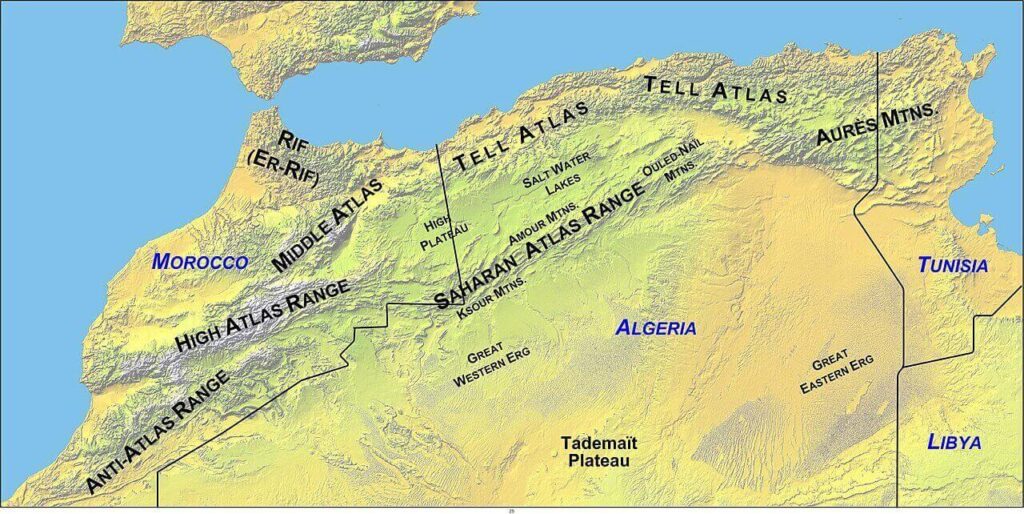
The Atlas Mountains are a mountain range in the Maghreb region of northwest Africa. Spanning approximately 2,500 kilometers through Morocco, Algeria, and Tunisia, this vast mountain system separates the Mediterranean and Atlantic regions from the Sahara Desert. It’s also one of the natural wonders of Morocco.
The highest peak is Mount Toubkal in southwestern Morocco, rising to 4,167 meters above sea level. It is the highest mountain in the Atlas Mountains and the highest peak in North Africa.
The Atlas Mountains are also home to long-established Amazigh (Berber) communities, particularly throughout Morocco’s mountain regions. Their villages, agriculture, livestock, and cultural traditions are an important part of the landscape and give the mountains a character that goes far beyond their impressive peaks.
The mountains are also home to a variety of plant and animal species, many of which are native to North Africa. From the forests and wildlife of the Middle Atlas to the high peaks of the High Atlas and the dry landscapes of the Anti-Atlas, the region contains remarkable ecological diversity.
The Mountain Ranges That Make Up the Atlas Mountains
There are several major mountain ranges within the wider Atlas system. For a traveler, six names are particularly useful to know:
- High Atlas
- Middle Atlas
- Anti-Atlas
- Tell Atlas
- Saharan Atlas
- Aurès Mountains
The High, Middle, and Anti-Atlas are particularly important when traveling in Morocco. The Tell Atlas, Saharan Atlas, and Aurès Mountains extend farther east through Algeria and Tunisia.
The different ranges are not simply variations of the same landscape. Their altitude, climate, geology, vegetation, and culture can change dramatically from one region to another.
High Atlas
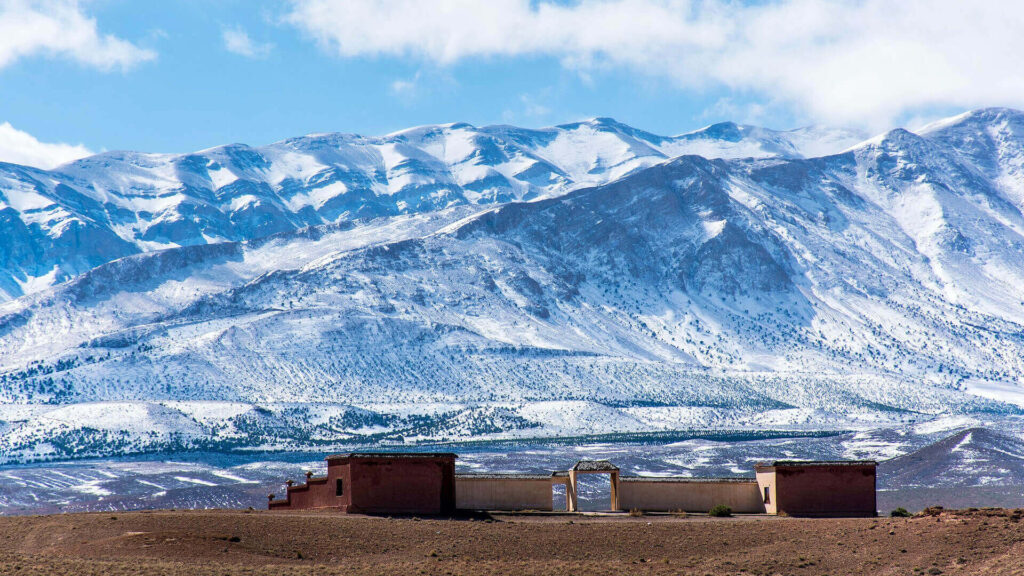
The High Atlas is the highest and most famous part of the Atlas Mountains. Often called the “roof of Morocco,” it is home to Mount Toubkal, the highest peak in North Africa. Stretching for more than 750 kilometers, the range forms a dramatic divide between Atlantic, Mediterranean, and Saharan Morocco.
The High Atlas stretches across central Morocco, from the Atlantic region in the west toward the Morocco-Algeria border. It contains several peaks above 4,000 meters, including Mount Toubkal at 4,167 meters and Ighil M’Goun at 4,071 meters. The landscape changes as the range extends south and east, eventually connecting with the drier Anti-Atlas and the landscapes around Ouarzazate.
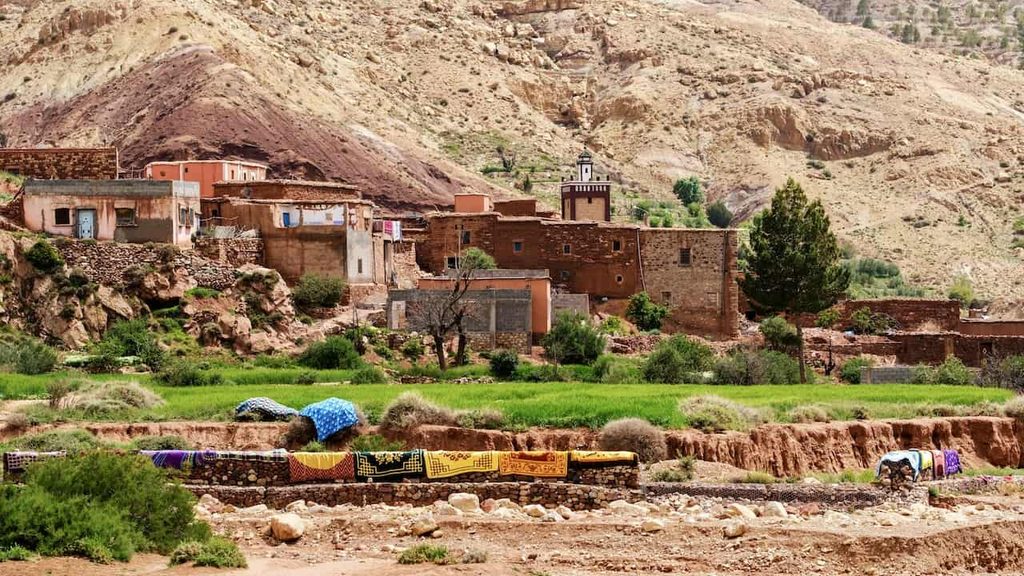
The mountains are mainly home to Amazigh (Berber) communities, many of whom have traditionally relied on agriculture and livestock. Small villages, terraced fields, orchards, and fertile valleys sit among the rugged peaks, creating a landscape very different from Morocco’s famous imperial cities and desert regions.
The Ourika Valley is one example of this mountain environment, where communities cultivate the highlands among dramatic scenery. Elsewhere, the artificial Lake Lalla Takerkoust, created by a hydroelectric dam near Barrage Cavagnac, provides an important source of water and supports local fishing.
Important towns and villages associated with the High Atlas include Ouarzazate, Tahannaout, Amizmiz, Imlil, Tin Mal, and Ijoukak. Beyond its spectacular scenery, the High Atlas is also known for its biodiversity, protected natural areas, and archaeological sites, making it one of Morocco’s most distinctive mountain regions.
What Makes the High Atlas Special?
The High Atlas is where you will find some of Morocco’s most dramatic mountain scenery. Snow can cover the highest peaks in colder months, while lower valleys can be green and fertile. Villages cling to mountainsides, rivers run through valleys, and traditional agricultural landscapes appear between the rocky slopes.
For travelers, the High Atlas is especially interesting because it can be experienced in many ways. You can admire the scenery from a mountain road, visit a valley or village, take a short walk, or plan a more demanding mountain trekking adventure.
Middle Atlas
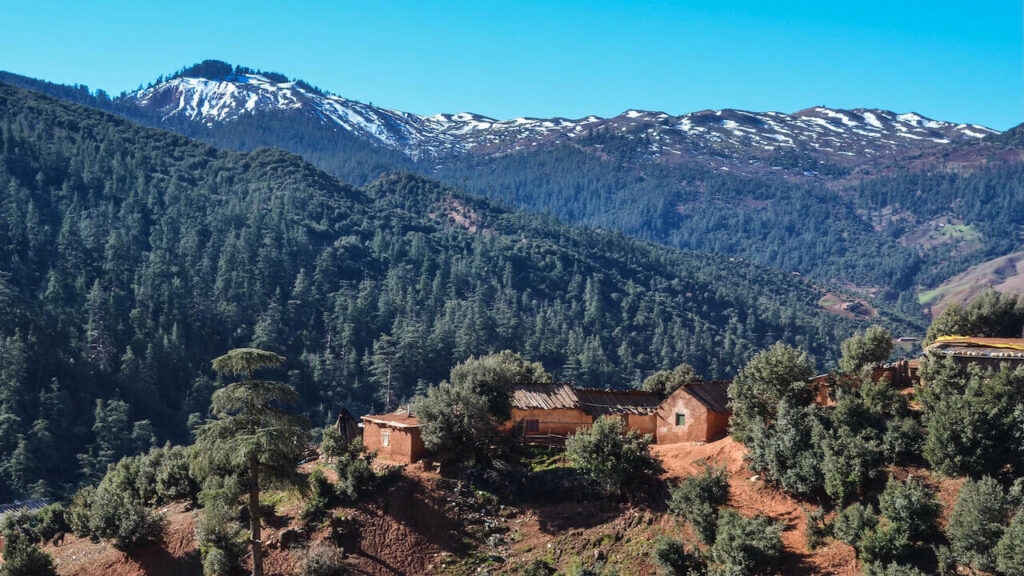
The Middle Atlas lies entirely within Morocco and is the northernmost of the country’s three major Atlas ranges. It stretches for about 350 kilometers, covering areas including Ifrane, Khenifra, Sefrou, Boulmane, Midelt, Hajeb, Taza, and Beni-Mellal.
The range is separated from the High Atlas by major river systems, including the Moulouya and Oum Er-Rbia, while the Sebou River forms part of its northern boundary toward the Rif. To the west are Morocco’s coastal plains, while the landscapes farther east gradually transition toward the drier interior.
The Middle Atlas receives more rainfall than Morocco’s southern mountain regions, helping create a landscape rich in forests, lakes, wildlife, and biodiversity. It also plays an important role in Morocco’s water resources, with its mountains feeding several major basins, including the Sebou, Bouregreg, Oum Er-Rbia, and Moulouya basins.
The region is also known for its cedar and oak forests and is an important habitat for the Barbary macaque, one of North Africa’s best-known wild animals.
Ifrane and the Middle Atlas
One of the best-known destinations in the Middle Atlas is Ifrane, a mountain town sitting at around 1,650 meters above sea level. Its red-roofed buildings, lakes, waterfalls, forests, and winter scenery make it feel surprisingly different from the Morocco many first-time visitors imagine. The town is surrounded by cedar forests and offers access to hiking landscapes and wildlife, including the Barbary macaque.
The Middle Atlas is therefore a good choice if you want to experience Morocco’s mountains without focusing entirely on high-altitude peaks.
Anti-Atlas
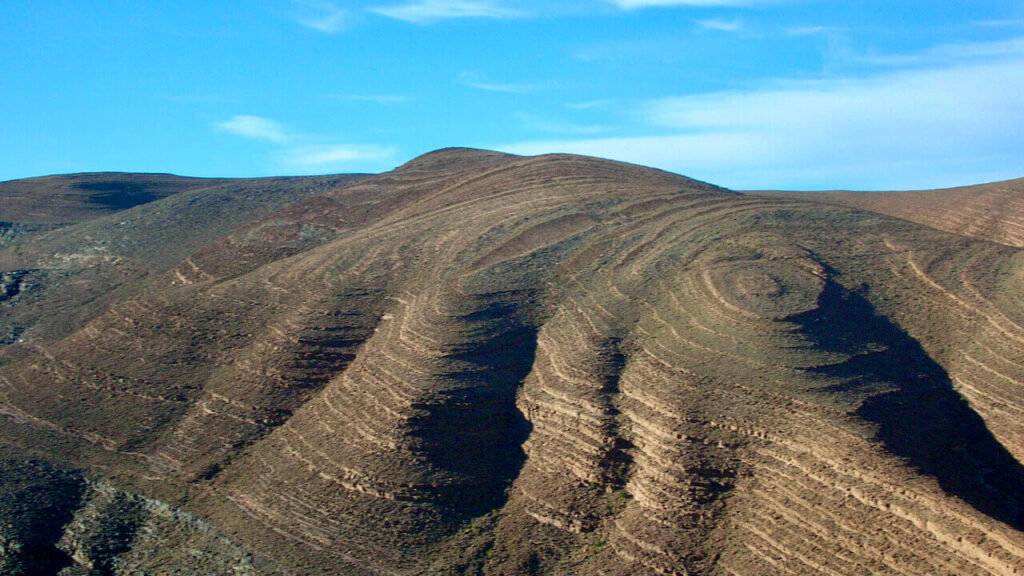
The Anti-Atlas is one of the most distinctive mountain regions in southern Morocco. The range extends for roughly 500 kilometers, running from the Atlantic coast in the southwest toward the northeast and the regions around Ouarzazate and Tafilalt. To the south, it approaches the Sahara, while the High Atlas lies farther to the north.
The Anti-Atlas has a much more arid character than the greener Middle Atlas. Its highest peak is Jbel Siroua, at about 3,300 meters, a volcanic massif that gives the region some of its most dramatic scenery. The area also includes the Jbel Saghro and the lower Jebel Bani ranges.
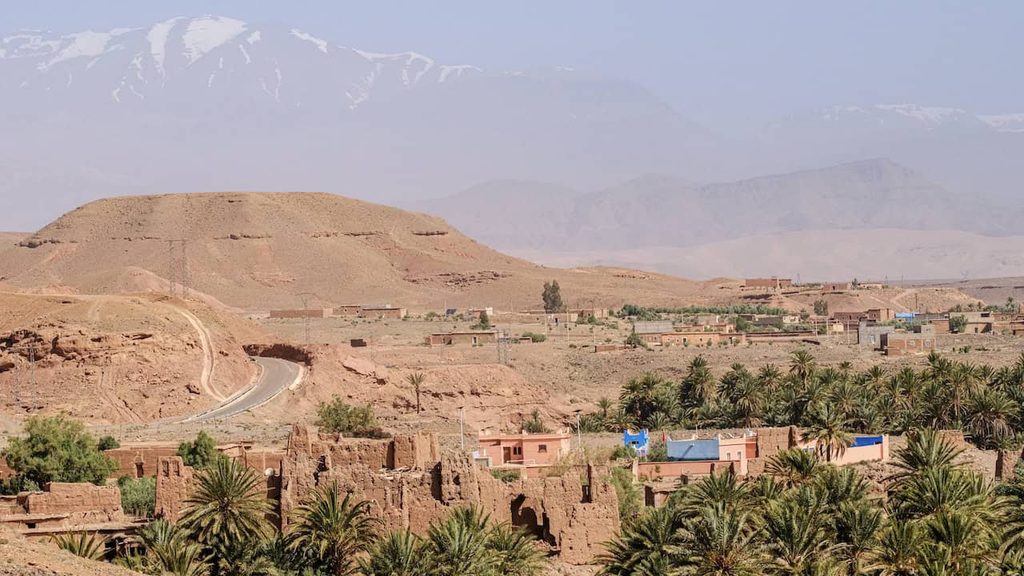
Its dry valleys, rugged rock formations, unusual geology, and diverse flora and fauna create a landscape that can feel almost desert-like. The region also has a strong Amazigh cultural character, adding another layer to its appeal.
For travelers, the Anti-Atlas offers a very different experience from the high, snow-covered peaks of the High Atlas. On top of that, Tafraoute is one of the best-known destinations in the region, surrounded by rugged mountains and striking rock formations.
Tafraoute
Tafraoute is one of the best-known places to experience the Anti-Atlas. The town is surrounded by rugged mountains, unusual rock formations, dry valleys, and colorful landscapes. It offers a completely different experience from the snowy peaks and greener valleys of the High Atlas.
For travelers who enjoy scenic drives, photography, culture, geology, and quieter mountain destinations, the Anti-Atlas can be particularly rewarding.
Tell Atlas
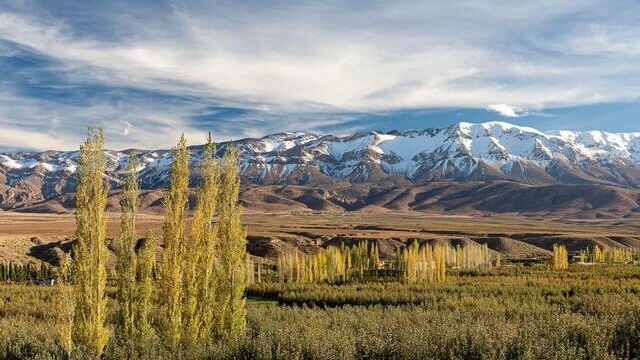
The Tell Atlas is a mountain range more than 1,500 kilometers long, stretching across Morocco, Algeria, and Tunisia. It runs roughly parallel to the Mediterranean coast, making it the northernmost part of the Atlas system in many areas.
Together with the Saharan Atlas to the south, the two ranges run broadly parallel before converging farther east in Algeria. Between them lie the Hautes Plaines, a high plateau where seasonal lakes can appear during wetter periods and agriculture takes place where conditions allow.
Because of its proximity to the Mediterranean, the Tell Atlas is generally more influenced by northern climates than the drier mountain ranges farther south. Parts of the region feature greener landscapes, forests, valleys, and agricultural land.
The Tell Atlas is particularly important for understanding the broader geography of the Atlas Mountains, which extends well beyond Morocco into Algeria and Tunisia.
Saharan Atlas
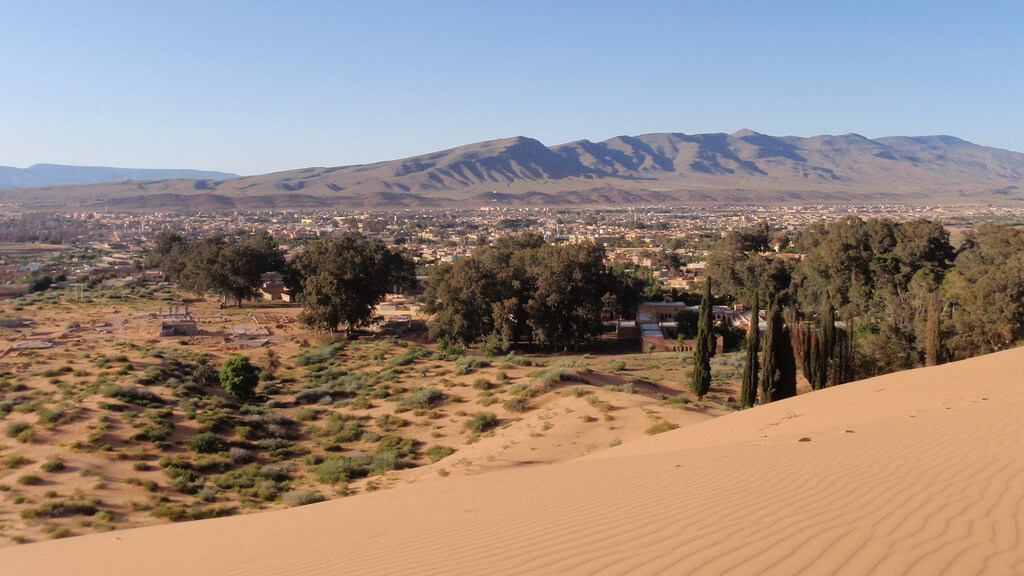
The Saharan Atlas lies mainly in Algeria and forms a series of mountain ranges approaching the northern edge of the Sahara. Although its peaks are lower than those of the High Atlas, the range remains significantly elevated compared with the Tell Atlas farther north.
The highest peak commonly associated with the Saharan Atlas is Djebel Aïssa, at about 2,236 meters. The range marks an important transition between northern Algeria and the Sahara, with increasingly dry conditions as the landscape moves south.
The Saharan Atlas receives less rainfall than the northern mountain regions. Its communities have adapted to the drier environment, with agriculture and pastoral activities concentrated in areas where water and suitable land are available.
Compared with Morocco’s High Atlas, this part of the Atlas system receives far less international tourism. For adventurous travelers interested in North Africa beyond Morocco, that relative lack of tourism makes the region particularly intriguing.
The Aurès Mountains
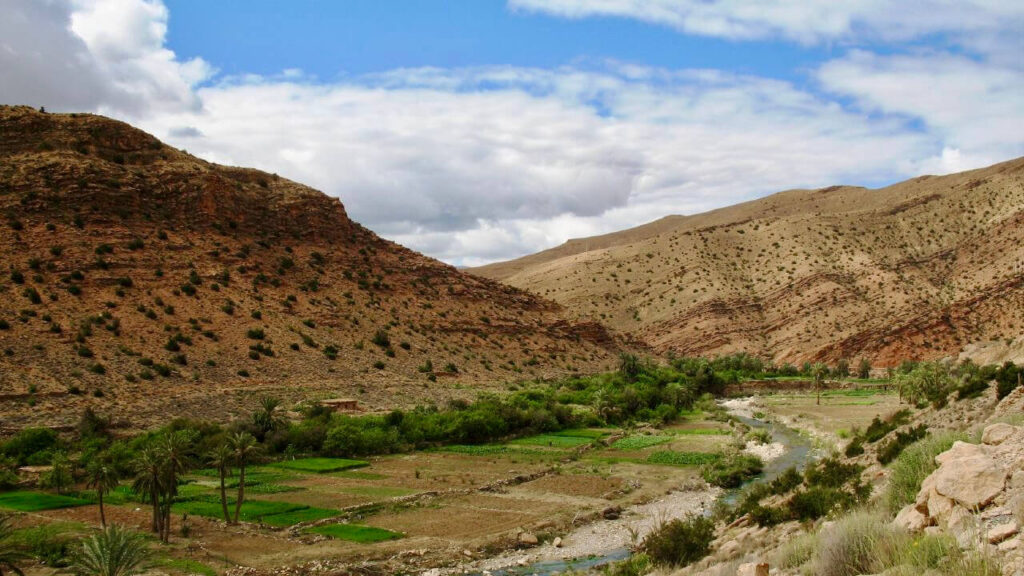
The Aurès Mountains form one of the eastern parts of the Atlas system, extending across northeastern Algeria and into Tunisia. Along with the Nememcha Mountains, they form an important mountain region in northeastern Algeria.
The highest peak is Mount Chélia, located west of Khenchela in the Bouhmama region. It rises to approximately 2,328 meters, or about 7,638 feet, above sea level.
The Aurès Mountains are less familiar to international travelers than Morocco’s High Atlas, but their rugged landscapes and cultural heritage offer a different perspective on the Atlas system.
Rather than being defined only by famous peaks, the Aurès region shows how the Atlas Mountains continue across North Africa, connecting landscapes and communities far beyond Morocco.
Atlas Mountains by the Numbers
The scale of the Atlas Mountains becomes easier to appreciate when you look at a few key numbers.
| Number | What it represents |
|---|---|
| ~2,500 km | Approximate length of the wider Atlas system |
| 3 countries | Morocco, Algeria, and Tunisia |
| 4,167 m | Mount Toubkal |
| 750+ km | Approximate length of the High Atlas |
| 350 km | Approximate length of the Middle Atlas |
| 3,300 m | Jbel Siroua, highest peak of the Anti-Atlas |
| 1,650 m | Approximate elevation of Ifrane |
The Moroccan National Tourist Office confirms the 4,167-meter elevation of Toubkal, the 750-kilometer High Atlas, the 350-kilometer Middle Atlas, and the 3,300-meter Jbel Siroua.
Best Places to Visit in the Atlas Mountains
If you are planning a trip, different parts of the Atlas Mountains offer very different experiences.
| Destination | Best for |
|---|---|
| Imlil | High Atlas scenery and access to Toubkal |
| Ourika Valley | A mountain escape from Marrakesh |
| Aït Bouguemez | Valley landscapes and Amazigh culture |
| Ifrane | Forests, lakes, wildlife, and cooler weather |
| Azrou | Cedar forests and Barbary macaques |
| Tafraoute | Rugged Anti-Atlas scenery |
| Oukaïmeden | High-altitude mountain landscapes |
| Azilal | Natural scenery, valleys, and waterfalls |
| Ouarzazate | Mountain and desert landscapes |
Imlil and the High Atlas
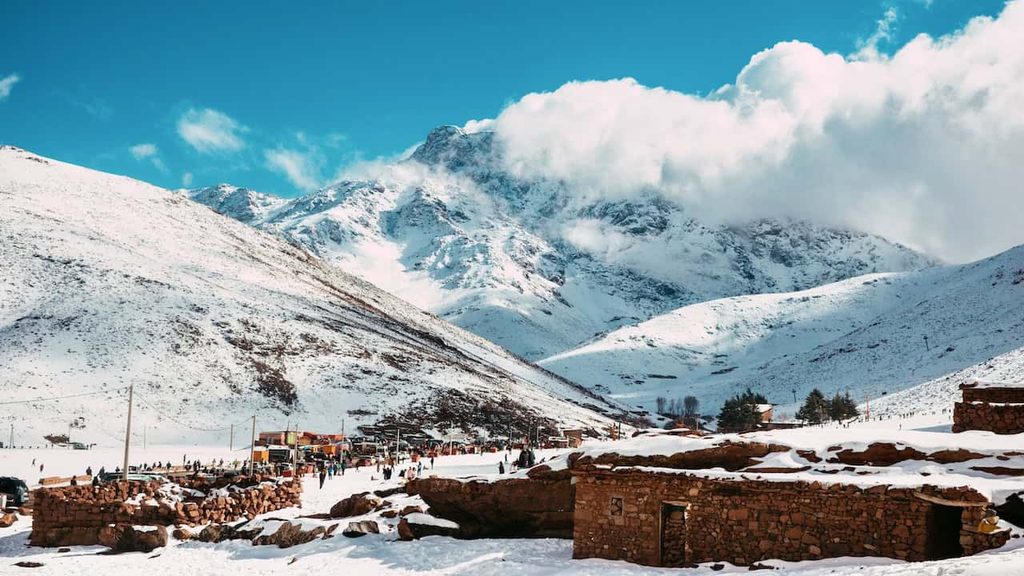
Imlil is one of the best-known mountain villages in Morocco and an important gateway to the High Atlas.
Ifrane and the Middle Atlas
Ifrane offers a completely different mountain experience. At around 1,650 meters, it is surrounded by forests, lakes, waterfalls, and mountain landscapes. The area is also known for Barbary macaques.
Tafraoute and the Anti-Atlas
Tafraoute is a good base for experiencing the rugged Anti-Atlas. The scenery here is much drier and more dramatic than the greener landscapes of the Middle Atlas.
What Are the Atlas Mountains Famous For?
The Atlas Mountains are famous for their dramatic landscapes, but their appeal goes well beyond mountain peaks.
Dramatic Landscapes
The scenery changes dramatically across the Atlas system. The High Atlas features towering peaks and deep valleys. The Middle Atlas brings forests, lakes, and volcanic plateaus. Farther south, the Anti-Atlas becomes increasingly dry and rugged. This variety is one of the main reasons the Atlas Mountains are so interesting to explore.
Amazigh Culture
The mountains have long been home to Amazigh communities.
In Morocco’s High Atlas, agriculture and livestock remain important parts of the local economy, while traditional villages and cultural practices remain visible throughout the region.
For travelers, this means that the mountains are not simply a natural attraction. They are also living cultural landscapes.
Wildlife and Forests
The Atlas Mountains support a variety of plant and animal life.
The Middle Atlas is especially known for its forests and wildlife. Around Ifrane, travelers can encounter cedar forests and Barbary macaques while exploring the surrounding mountain landscape.
Valleys, Lakes, and Waterfalls
Mountain scenery in Morocco is not limited to rocky peaks.
The Middle Atlas contains lakes, forests, and waterfalls, while the High Atlas is known for fertile valleys and mountain communities. These contrasting environments make the Atlas region surprisingly diverse.
Best Time to Visit the Atlas Mountains
The best time to visit depends on where you go and what you want to experience.
Spring
Spring can be an excellent time to explore the Atlas Mountains. Valleys become greener, temperatures are generally comfortable, and flowers can add color to mountain landscapes.
Summer
Summer can be hot in lower and more arid areas, especially toward the Anti-Atlas and desert regions. Higher mountain areas can offer cooler conditions.
Autumn
Autumn brings cooler temperatures and can be a comfortable season for exploring mountain villages, forests, and valleys.
Winter
Winter changes the character of the higher Atlas Mountains. Snow can cover the High Atlas peaks, while places such as Ifrane can experience distinctly cold and snowy conditions.
If your main goal is a serious trek or Mount Toubkal, use this dedicated Atlas Mountains trekking guide for more specific seasonal and route information rather than relying only on these broad seasonal guidelines.
How to Visit the Atlas Mountains
The best gateway depends on which part of the Atlas Mountains you want to experience.
From Marrakesh to the High Atlas
Marrakesh is one of the easiest gateways to the High Atlas. The city’s location makes it possible to travel from an urban environment into mountain landscapes within a relatively short journey. Toubkal National Park lies between the N’Fiss and Ourika valleys and contains about 94,000 acres of protected land.
This makes the High Atlas particularly convenient for travelers visiting Marrakesh.
From Fez to the Middle Atlas
Fez is a convenient base for exploring parts of the Middle Atlas.
Ifrane, for example, sits at around 1,650 meters and offers forests, lakes, waterfalls, and wildlife in a distinctly cooler mountain environment.
From Southern Morocco to the Anti-Atlas
For the Anti-Atlas, destinations such as Agadir and Taroudant can provide useful starting points.
This region is especially attractive if you want to combine mountain landscapes with southern Morocco’s dry valleys and desert-edge scenery.
Atlas Mountains FAQs
What is so special about the Atlas Mountains?
The Atlas Mountains are special for their dramatic variety, from snow-capped High Atlas peaks and green valleys to cedar forests, wildlife, Amazigh villages, and arid landscapes near the Sahara. They also contain Mount Toubkal, the highest peak in North Africa at 4,167 meters.
Which city is closest to the Atlas Mountains?
Marrakesh is one of the closest and most convenient major cities for visiting Morocco’s High Atlas. Toubkal National Park is only a few dozen miles from Marrakesh, making the mountains easily accessible for travelers.
Is it worth going to the Atlas Mountains?
Yes, the Atlas Mountains are well worth visiting. They offer spectacular scenery, traditional Amazigh villages, wildlife, valleys, forests, and a completely different experience from Morocco’s cities and desert landscapes.
Can you do a day trip to the Atlas Mountains from Marrakesh?
Yes. Day trips from Marrakesh to the Atlas Mountains are possible, with popular options including the Ourika Valley and nearby mountain villages. However, longer stays are better if you want to experience the mountains beyond the main viewpoints and tourist stops.
What is the myth of the Atlas Mountains?
In Greek mythology, Atlas was a Titan punished by Zeus and condemned to hold up the heavens. Ancient writers associated his name with the Atlas Mountains, although the exact origin of the mountain range’s name remains debated.
Is Atlas Mountain hard to climb?
It depends on the mountain and route. Mount Toubkal, the highest peak at 4,167 meters, is physically demanding because of its altitude and terrain, but it does not require technical mountaineering skills under normal conditions. The standard ascent generally takes two to three days from Imlil. Anyways, it’s important to well-prepare for any trekking routes in Atlas Mountain.
Final Thoughts on the Atlas Mountains
The Atlas Mountains are much more than a chain of high peaks. They are a vast and varied mountain system where dramatic landscapes, traditional communities, forests, valleys, wildlife, and arid terrain come together across North Africa.
For travelers visiting Morocco, the High Atlas is an obvious place to begin. Mount Toubkal, Imlil, the valleys around Marrakesh, and the mountain communities offer some of the country’s most memorable scenery.
But the Middle Atlas and Anti-Atlas show another side of the country. The Middle Atlas brings forests, lakes, and wildlife. The Anti-Atlas offers rugged rocks, dry valleys, and landscapes that feel much closer to the Sahara. Farther east, the Atlas system continues through Algeria and Tunisia.
And you do not have to conquer a summit to appreciate it. Sometimes, simply following a winding mountain road, walking through a mountain village, looking across a valley, or standing beneath a snow-covered peak is enough. For me, that is what makes the Atlas Mountains worth putting on a travel wishlist.
Hey, Plan Your Trip Like a Pro With These Resources!Pack Smart
Don't leave without essentials! Grab your Travel Medicines and a handy Travel Kit, must-have for any adventure. Visa Made Easy
Need a visa fast? IVISA offers quick, secured services with almost zero rejection risk. Get yours sorted now!
Find Flights & Rides
Score deals with my Find Cheap Flights Guide.
Or book buses, trains, and more on 12Go - easy travel to any spots!
Book Your Stay
I swear by Booking.com for hotels. Want a cozy vibe? Snag Free Airbnb Credits for homestays - click to save! Driving Your Way
Love road trips? Compare prices and snag steals on Discover Cars for a fun, flexible ride.
Stay Protected
Post-COVID, Travel Insurance is a game-changer. Shield yourself from health hiccups - get covered today!
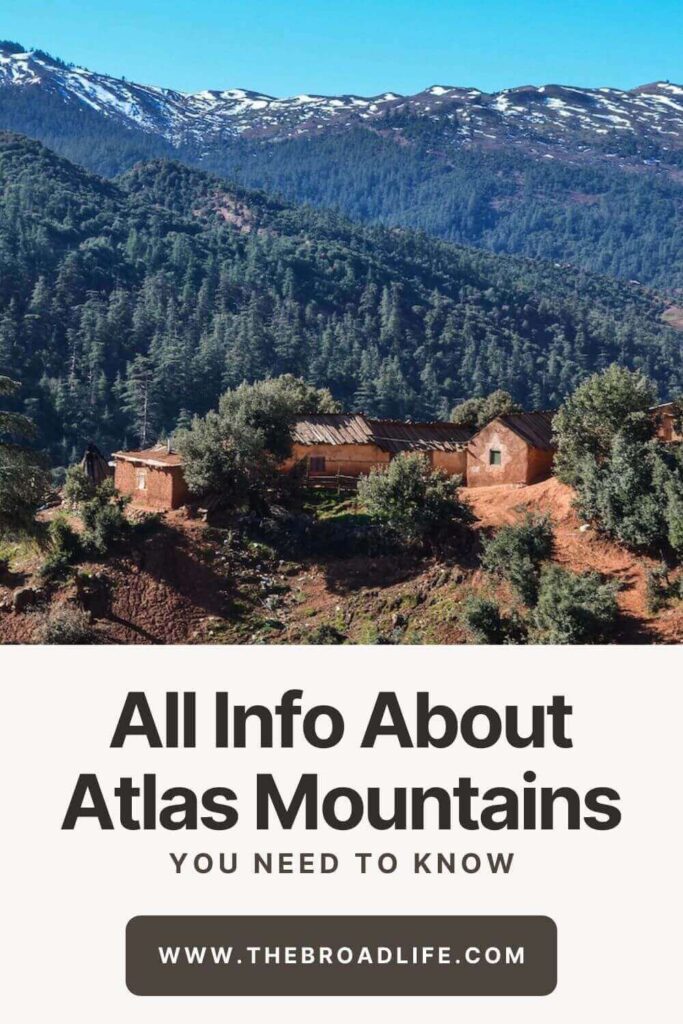
PIN NOW TO SAVE INFO FOR YOUR NEXT TRIP TO ATLAS MOUNTAINS

Khoi Nguyen
Khoi Nguyen builds The Broad Life with a desire to inspire people go exploring the world and live a more interesting, experience, and adventurous life. This blog shares the stories, pictures, and experiences at destinations where he has traveled to.
10 Comments
-
-
Khoi Nguyen
The Atlas Mountains should be on top of your plan.
-
-
tweenselmom
The landscape looks incredible! This makes me miss traveling so much more 🙂
-
Khoi Nguyen
Are you planning for a vacation?
-
-
Archana Singh
I am a mountain person and the Atlas mountains look stunning. I really loved the beautiful landscape of the Tell Atlas range. Now I am dreaming about visiting this place.
-
Khoi Nguyen
I’m sure you will have a great experience at the Tell Atlas when visiting it.
-
-
Rhea
Nice! this is one of the activities i enjoy most. The experience with nature will always be amazing. In some trek, they do require some tour guide to assist u going up.
-
Khoi Nguyen
I’m glad that you like this post and enjoy trekking.
-
-
Elise Ho
My husband and I have been discussing trips that we most want to go on. Neither of our next two places include mountains but maybe our third should.
-
Khoi Nguyen
The Atlas Mountains should be on your next plan of a mountain trip.
-


Cindy
The Atlas Mountains are breathtaking! I was planning a trip to Africa pre-pandemic. I think I’ll start planning one again.