


Anytime I come to Quy Nhon, Bánh Hỏi Lòng Heo is the food that I never miss. In English, I found that people call the food “soft thin vermicelli noodles with boiled pork offal and congee.” Here in this article, I will call it by its Vietnamese name, Bánh Hỏi Lòng Heo, so you may easily recognize it when visiting Quy Nhon for its cuisine.
Bánh hỏi, or soft thin vermicelli noodles, is a popular food in many provinces in Vietnam. We have soft thin vermicelli noodles with roasted pork in Phan Thiet, while people in Phu Yen eat them with rousong, or meat floss. In Quy Nhon, we have soft thin vermicelli noodles with pork offal. If you come to Quy Nhon, Binh Dinh, but never try Bánh Hỏi Lòng Heo, it’s like you haven’t come to the place.
Among the many Quy Nhon food specialties, Bánh Hỏi Lòng Heo stands out for its simple ingredients and distinctive combination of flavors. This traditional Vietnamese pork offal dish brings together delicate rice vermicelli, boiled pork organs, fresh herbs, dipping sauce, and a bowl of warm congee. It is a local favorite that offers visitors a taste of everyday food culture in central Vietnam.
The Name ‘Bánh Hỏi’
I don’t know exactly where the name came from, but some people told me it was named a long time ago. Everyone asked the name of the noodle when they first saw it, and maybe that is where the name came from. To really translate the word “Bánh Hỏi” into English, it would be “Asking Cake” or “Asking Noodle.” I’m not so sure.
Although “Asking Noodle” may sound unusual in English, it is best to keep the Vietnamese name Bánh Hỏi when ordering this food in Quy Nhon. The name is more recognizable to local vendors and helps travelers avoid confusion.
What Is Bánh Hỏi Lòng Heo, the Vietnamese Pork Offal Dish?
I like foods made from pork offal, so I like Bánh Hỏi Lòng Heo. It brings to mind the feel of the martial land of Binh Dinh, rustic and simple. The locals eat this food at different times of the day.
Also made from rice flour, Bánh Hỏi is a member of the vermicelli family, with different styles of noodles lined up in thin layers. A little bit of oil and chopped chives add beautiful color and good taste.
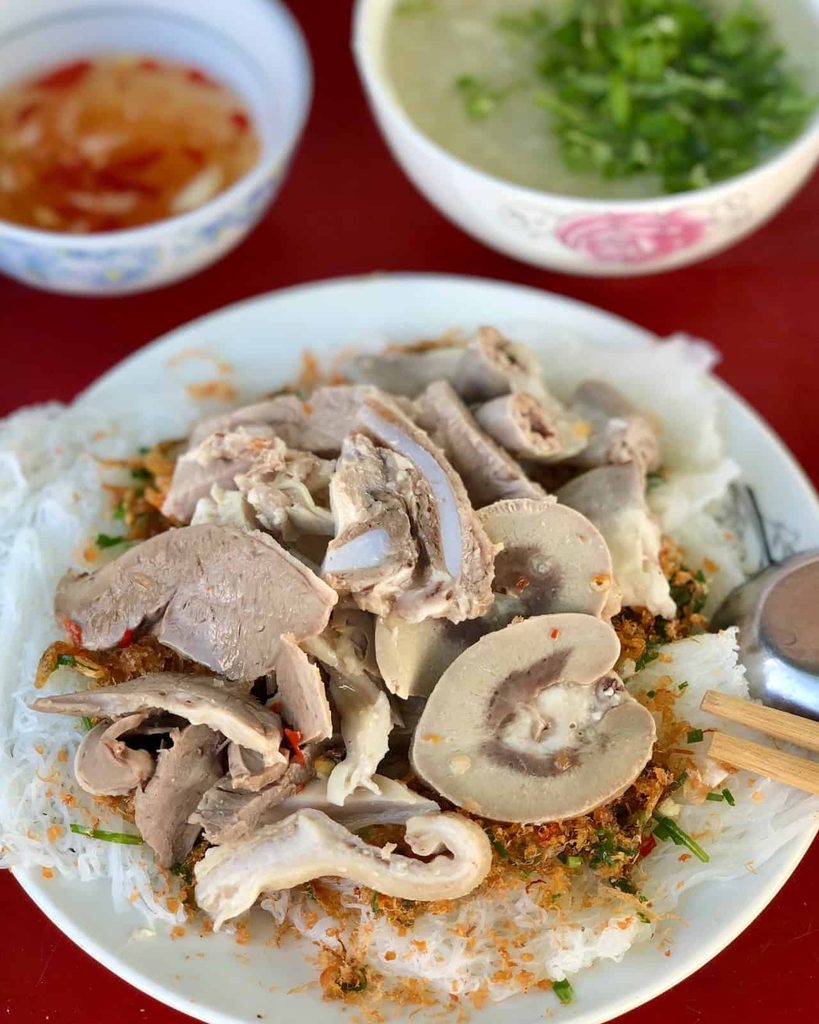
When ordered, the sellers will bring you a plate of noodles, a bowl of congee, and a plate of pork offal, including heart, liver, kidney, and sausage, among other items. You then eat the noodles and pork offal with chili fish sauce and some vegetables to enjoy the full taste of this Quy Nhon specialty.
You shouldn’t miss the bowl of congee. Congee is made with stewed blood and minced meat for more flavor and a spicy taste. You can eat the congee later or enjoy it with the noodles and pork offal.
The combination makes Bánh Hỏi Lòng Heo, also known as Bánh Hỏi Cháo Lòng, a distinctive Vietnamese pork offal meal. The soft rice noodles have a delicate texture, while the pork organs offer a variety of flavors and textures. Fresh herbs and chili fish sauce add freshness and a little heat.
The warm congee completes the meal, making it especially comforting when enjoyed as a traditional Vietnamese breakfast. Although pork offal may not be familiar to every international traveler, trying it is a memorable way to explore the local cuisine of Quy Nhon.

How to Eat Bánh Hỏi Lòng Heo
If this is your first time trying pork offal in Vietnam, you may wonder how to enjoy this local specialty. There is no complicated method, and you can follow the way locals eat it.
- Take a portion of the soft Bánh Hỏi rice vermicelli.
- Add pork offal, such as heart, liver, kidney, and other available cuts.
- Dip the noodles and offal into the chili fish sauce.
- Enjoy them with fresh vegetables and herbs.
- Have a spoonful of warm congee between bites or eat it together with the other ingredients.
The balance of soft noodles, savory pork offal, fresh vegetables, and warm congee makes this Quy Nhon food specialty a satisfying local meal.
Where to Eat Bánh Hỏi Lòng Heo in Quy Nhon
If you want to try Bánh Hỏi Cháo Lòng in Quy Nhon, you can find it at local food stalls and restaurants throughout the city. Prices and opening hours can vary by restaurant and portion size. Recent local listings suggest that a serving may cost approximately 20,000–50,000 VND, but this is only a reference range.
Check the latest information before visiting, especially if you plan to arrive later in the day. Some well-known places mentioned in recent food guides include:
- Quán Mai Tư, 41 Nguyễn Chánh
- Bánh Hỏi Lòng Heo Mẫn, 76 Trần Phú
- Bánh Hỏi Lòng Heo Hồng Thanh, 22 Phan Bội Châu
- Bánh Hỏi Cháo Lòng Cô Năm, 41 Nguyễn Chánh
Final Thoughts on Bánh Hỏi Lòng Heo
Bánh Hỏi Lòng Heo is more than just a Vietnamese pork offal dish. It represents the simple, rustic food culture of Quy Nhon and Binh Dinh, bringing together rice vermicelli, pork organs, fresh herbs, dipping sauce, and warm congee.
Anytime I return to Quy Nhon, this is one of the local foods I look forward to enjoying again. If you are planning a trip to central Vietnam and want to explore authentic Vietnamese cuisine, make sure to add Bánh Hỏi Lòng Heo to your food list.
For more travel inspiration, check out my Quy Nhon travel guide and discover more places to visit and local foods to try.
‘PIN IT’ NOW TO SAVE THE INFO & ADDRESS FOR QUY NHON FOOD TOUR!

