
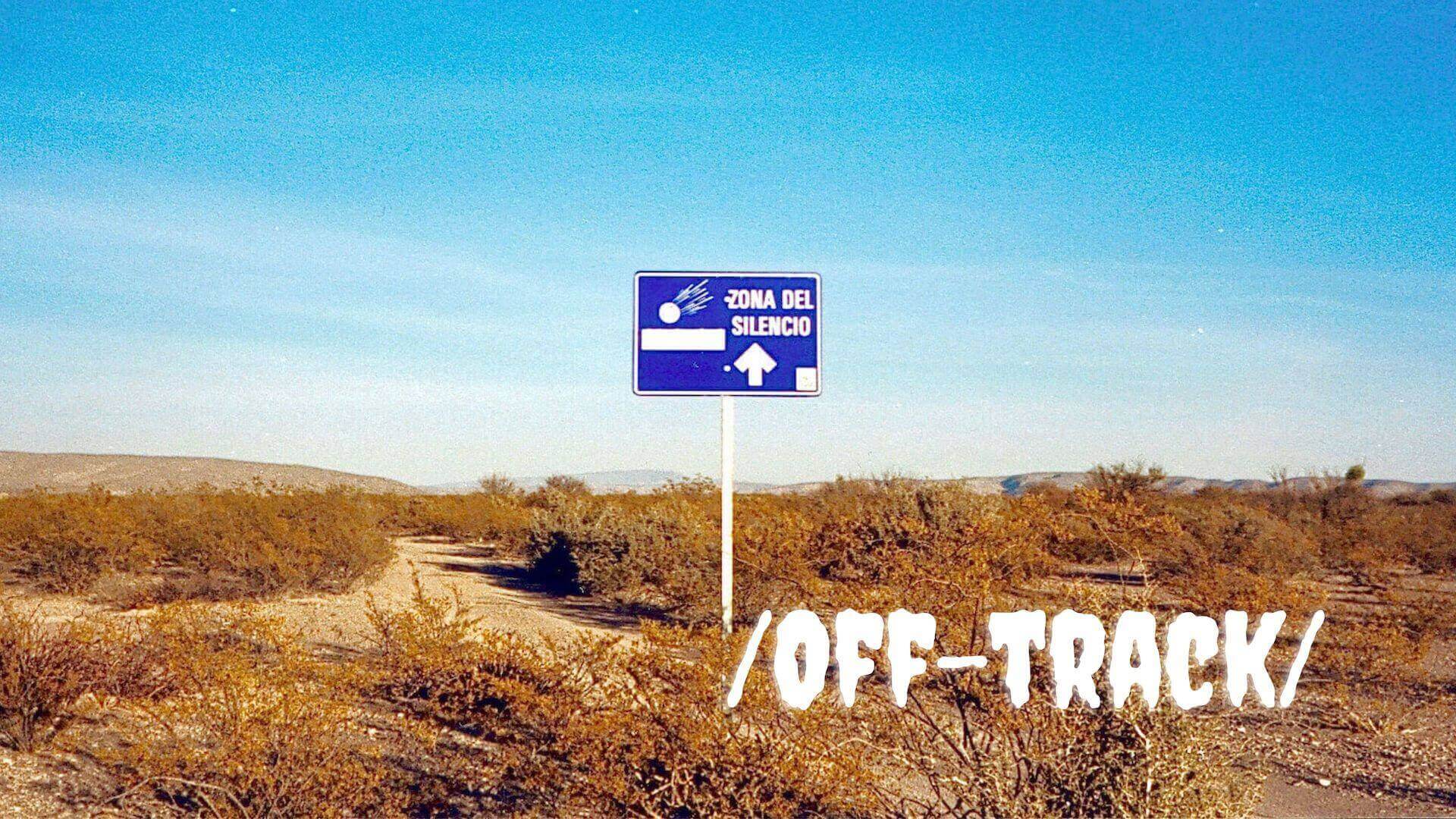
Mapimí Silent Zone – A Mystery Land Challenges Every Scientist
The Mapimí Silent Zone, also known as La Zona del Silencio or the Zone of Silence, is a remote desert region in northern Mexico, associated with the Bolsón de Mapimí in the state of Durango. For decades, the area has attracted attention because of stories about radio interference, unusual geological features, meteorites, mysterious lights, UFO sightings, and a famous U.S. military rocket that crashed in the region in 1970.
But how much of the Mapimí Silent Zone is fact, and how much is legend? The mystery surrounding this remote corner of Mexico has inspired scientists, travelers, journalists, and curious adventurers for decades. In this article, we’ll explore the stories behind the Zone of Silence, the science and history surrounding it, and what you need to know before traveling there.
Mapimí Silent Zone at a Glance
The Mapimí Silent Zone, also known as La Zona del Silencio, is a remote desert region in northern Mexico associated with the Bolsón de Mapimí. It is famous for the 1970 Athena rocket incident, meteorites, unusual geological features, and decades of mysterious stories and legends.
| Detail | Information |
|---|---|
| Also known as | La Zona del Silencio, Zone of Silence |
| Country | Mexico |
| Region | Northern Mexico, Bolsón de Mapimí |
| State | Durango |
| Landscape | Chihuahuan Desert |
| Associated protected area | Mapimí Biosphere Reserve |
| Known for | The 1970 Athena rocket crash, meteorites, unusual geological features, and mystery legends |
| Nearest access area | La Flor / Ceballos area |
The Mexican government identifies the Zona del Silencio as an attraction associated with Mapimí, while CONANP identifies the Mapimí Biosphere Reserve as a protected natural area with designated access and visitor activities.
What Is the Mapimí Silent Zone?
The Mapimí Silent Zone is a remote desert area in northern Mexico that has become famous for its unusual reputation. It is associated with the Bolsón de Mapimí and the wider Chihuahuan Desert landscape, an environment characterized by dry conditions, sparse vegetation, and distinctive desert wildlife.
The area became internationally known through a combination of real historical events, scientific interest, and local stories. Reports of unusual communication interference helped create the “Zone of Silence” nickname, while the 1970 Athena rocket crash added an extraordinary chapter to its history.
Over time, stories of UFOs, strange lights, mysterious creatures, and supposed electromagnetic anomalies transformed the area from a remote desert into one of Mexico’s most famous mysterious places.
However, it is important to distinguish between documented events and local legends. The Mapimí Silent Zone is real, but claims that the entire area blocks radio signals or is influenced by extraterrestrial forces have not been scientifically established.
The Stories of Mapimí Silent Zone
Story 1 – A Zone of Silence was Discovered by the Pilot Francisco Sarabia
Initially, Mapimí has been known to the world since 1930. At that time, a Mexican pilot, Francisco Sarabia, discovered something unusual about this special land.
The reason this area is called the “silent zone” is that all radio signals – shortwave, telephone waves, satellite signals – seem to be affected by a mysterious polar force that makes them impossible to penetrate.
Accordingly, people in the Mapimí Silent Zone cannot communicate with the rest of the world. Experts and scientists have not discovered any traces of human life in the Zone of Silence. Only a few species of plants and animals grow here.
Story 2 – The 1970 Athena Rocket Crash
One of the most important real events connected to the Mapimí Silent Zone happened on July 11, 1970.
A U.S. Athena rocket was launched from the Green River military facility in Utah as part of a test mission. The rocket was expected to reach the White Sands Missile Range in New Mexico, but it went off course and eventually crashed in northern Mexico.
The incident became one of the defining stories associated with the Zone of Silence. The unusual location of the crash helped fuel speculation that some mysterious force had somehow pulled the rocket toward the region.
What Happened to the Athena Rocket?
The Athena rocket’s unexpected trajectory and crash became a major part of the mythology surrounding the Zone of Silence Mexico. The U.S. military carried out a recovery operation after the crash, which brought additional attention to the remote desert region.
The incident is particularly interesting because it is a documented historical event, unlike many of the UFO and paranormal stories associated with the area. However, there is no established scientific evidence that a mysterious magnetic or extraterrestrial force caused the rocket to change course.
The Athena rocket incident nevertheless helped transform the Mapimí region into one of the world’s best-known mysterious places.
Story 3 – Stories of Strange Creatures
Another story recounts that a group of investigators received the aid of a strange human being in the Silent Zone after they were knocked unconscious by an unusual dust cloud.
Other stories claim that animals in the region are somehow unusual or mutated and that rare plant species can be found in the desert. Some visitors have also described a strange or suffocating feeling while traveling through the area.
These stories have become part of the mythology surrounding the Mapimí Silent Zone, although they should be treated as anecdotal reports rather than established scientific evidence.
Story 4 – Mysterious Lights and UFO Sightings
Forest guardians near the Silent Zone have reportedly described mysterious lights in the night and flying objects appearing to land vertically, sometimes leaving what they describe as burned vegetation below.
Ranchers in the area have also reported seeing mysterious halos, strange lights, bright streaks of fire, or what they believed were “planes landing vertically in the wilderness desert.”
There have also been stories of strange humanoid creatures. One particularly famous local account describes three long, blonde-haired humanoid visitors, two males and one female, who reportedly spoke fluent Spanish and repeatedly asked for water. According to the story, they claimed to come from “heaven.”
These accounts are fascinating parts of the Zone of Silence legend, but they remain anecdotal stories rather than scientifically verified encounters.
Mapimí Silent Zone: Fact vs. Legend
The mystery of the Mapimí Silent Zone becomes much more interesting when we separate what is documented from what remains part of local folklore.
What Is Actually Documented?
The Mapimí region is a real and remote desert environment in northern Mexico. It is associated with the Mapimí Biosphere Reserve, an important protected natural area.
The 1970 Athena rocket crash is also a documented historical event. The region has attracted scientific interest because of its geology, meteorites, desert ecosystem, and unusual stories about electromagnetic activity.
What Remains Unproven?
Many of the most extraordinary claims associated with the Zone of Silence remain unproven. These include claims that the area completely blocks radio signals, that extraterrestrial forces operate there, that animals have mysteriously mutated, and that UFOs regularly visit the desert.
That does not mean the stories are uninteresting. In fact, the combination of real events, unusual desert landscapes, scientific research, and local legends is precisely what makes the Mapimí Silent Zone so fascinating.
What Does Science Say About the Zone of Silence?
Scientific Research in the Mapimí Region
The name Mapimí Silent Zone quickly became known outside Mexico, and researchers became interested in studying the region and its unusual reputation.
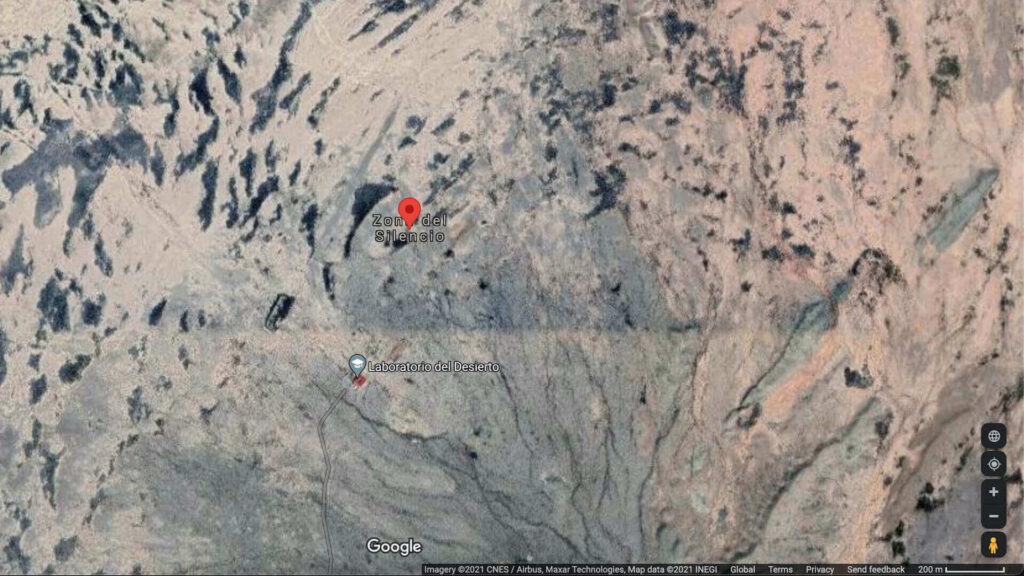
The Mexican government established scientific facilities in the area, including the Laboratorio del Desierto, to conduct research into the desert environment, geology, mineral composition, and other characteristics of the region.
Rather than confirming a supernatural explanation, scientific interest has helped demonstrate that the Mapimí region is a fascinating natural environment in its own right.
Magnetic Anomalies and Mineral Deposits
High concentrations of minerals and the region’s geological characteristics have often been mentioned when discussing possible explanations for unusual reports from the Zone of Silence.
Meteorites are also part of the area’s story, which has contributed to speculation about whether extraterrestrial material could explain unusual magnetic characteristics.
However, it is important not to jump from “the region contains unusual minerals” to “these minerals cause the Zone of Silence.” There is no established evidence proving that mineral deposits or magnetism explain all of the area’s reported communication anomalies.
Do Radio Signals Really Stop Working?
The popular story says that radios and other communication equipment stop working in the Zone of Silence. However, this claim should be treated carefully.
The area does not have a scientifically established reputation as a giant electromagnetic barrier that prevents all communication. Radio performance can be affected by many ordinary factors, including terrain, distance, atmospheric conditions, equipment, and the lack of communication infrastructure in remote desert areas.
The mystery therefore remains more complicated than the popular story suggests.
The Natural Side of the Mapimí Silent Zone
The Mapimí Silent Zone isn’t only about mysteries and UFO stories. The region is also part of a remarkable desert ecosystem.
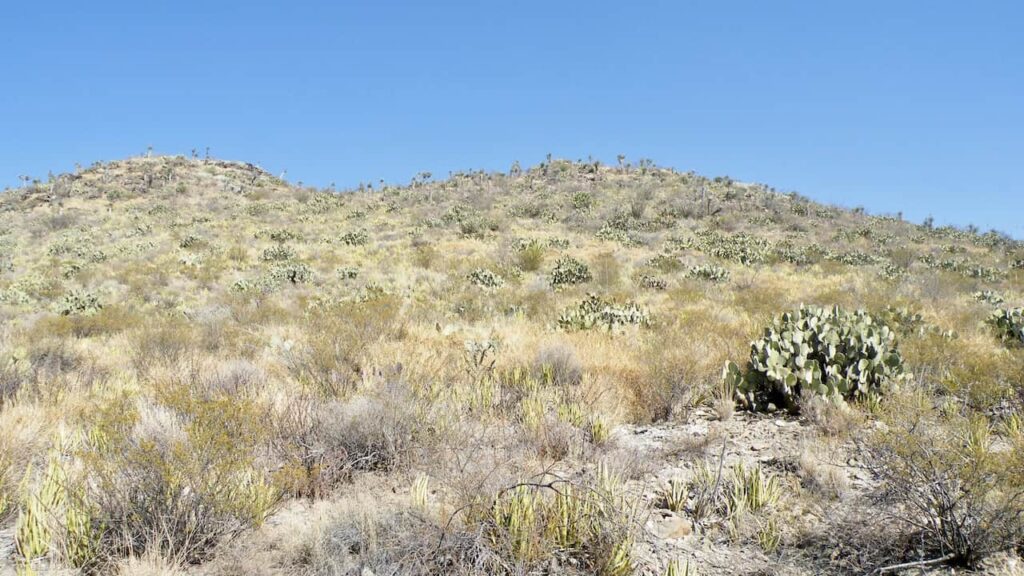
The surrounding Mapimí Biosphere Reserve protects an important portion of the Chihuahuan Desert and its wildlife. Visitors interested in nature can encounter desert landscapes, native plants, birds, reptiles, and other wildlife adapted to the harsh environment.
The remote scenery is part of the attraction itself. Wide-open desert landscapes, unusual geological formations, clear skies, and the feeling of being far away from major cities make the region a very different experience from conventional Mexican tourist destinations.
For travelers, this natural side of the Zone of Silence is worth discovering even if you don’t believe any of the paranormal stories.
Credit: Photo by Amante Darmanin via Wikimedia Commons, CC BY 2.0.
Things You Need to Know Before Traveling to the Zone of Silence
The Mapimí Silent Zone is a remote desert destination, so preparation is essential.
- Bring plenty of drinking water.
- Carry enough fuel for your planned route.
- Download offline maps before entering remote areas.
- Bring a backup navigation method.
- Check weather and road conditions before leaving.
- Avoid traveling alone into isolated areas when possible.
- Carry a charged phone and power bank, but don’t depend entirely on mobile service.
- Wear appropriate clothing, footwear, sun protection, and a hat.
- Bring basic first-aid and emergency supplies.
- Respect protected-area rules and local communities.
- Don’t disturb wildlife, plants, geological features, or archaeological sites.
How to Visit the Mapimí Silent Zone
You can find references to Zona del Silencio on online maps, but visiting this remote region requires more preparation than traveling to a typical Mexican attraction.
Where Is the Mapimí Silent Zone?
The Mapimí Silent Zone is in northern Mexico, associated with the Bolsón de Mapimí and the state of Durango. The wider region extends across a remote desert landscape near the boundaries of Durango, Chihuahua, and Coahuila.
Because this is a sparsely populated desert environment, travelers should not expect the same services, roads, or connectivity available in major Mexican cities.
How to Get to the Zone of Silence
Rather than relying entirely on Google Maps, prepare your route before leaving your accommodation. Download offline maps, carry a backup navigation method, and check current road and access conditions before traveling.
A private vehicle is generally the most practical way to explore remote parts of the region. Depending on your planned destination, road conditions can vary, so make sure your vehicle is appropriate for the terrain and that you have enough fuel, water, and supplies.
If you’re unfamiliar with remote desert travel, arranging a local guide or organized excursion can be a safer option.
Best Time to Visit the Mapimí Silent Zone
The best time to explore the Mapimí Silent Zone depends on weather conditions and your tolerance for desert temperatures.
Northern Mexico can experience very hot conditions during the warmer months, while winter nights can become surprisingly cold. For a more comfortable experience, consider traveling during the milder seasons and avoid the hottest part of the day for outdoor exploration.
Before your trip, check the latest weather forecast and local access conditions. Because the Zone of Silence is remote, poor weather or road conditions can have a much greater impact than they would in a major city.
Where to Stay on the Trip to Mapimí
Staying in Ciudad Jiménez
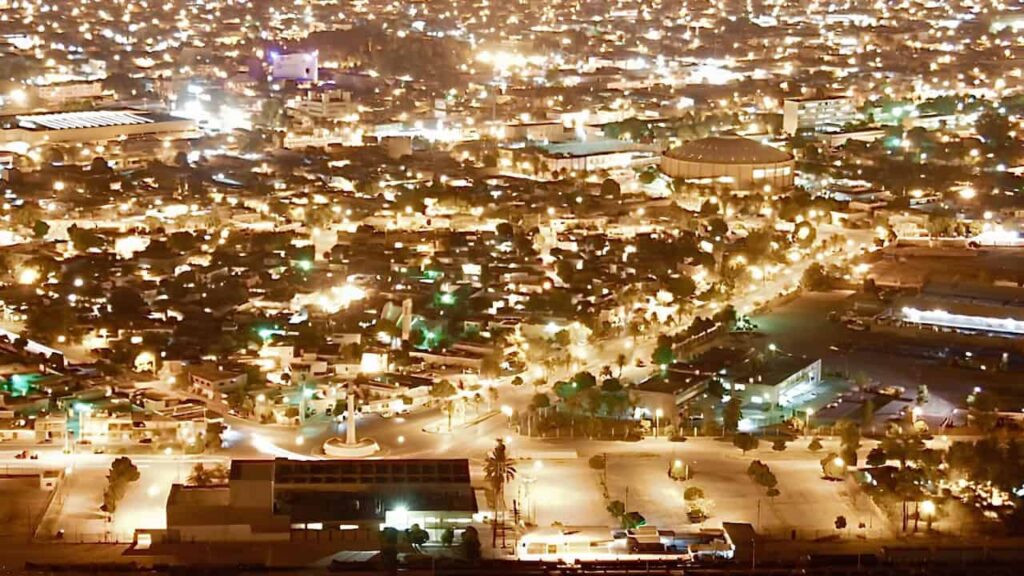
There is the Hotel Jiménez Plaza, which is quite good for a stay in the city, Ciudad Jiménez. From the city, it takes about 3h15′ to go to the Lab. Of course, you can easily track the route with GPS to go to the destination.
Staying in a nearby city gives you access to restaurants, fuel, accommodation, and other basic services before heading into the remote desert.
Staying in Torreón
Another option is to use Torreón as a larger urban base. The city offers a wider selection of hotels, restaurants, transportation, and other services, which can be convenient if you’re combining the Zone of Silence with a broader northern Mexico itinerary. It’s about 175km from the city to the Zone of Silence, which probably takes you 3h50′ to get there.
Credit: Photo by Sr. Jesus (Ignatius244) via Flickr.
Frequently Asked Questions About the Mapimí Silent Zone
Can You Visit the Zone of Silence in Mexico?
Yes, you can visit the Mapimí Silent Zone in Mexico, although it is a remote desert destination that requires careful planning. The area is associated with the Mapimí Biosphere Reserve, where CONANP currently lists private transportation as the main way to access the reserve, with public transportation reaching Ceballos, Durango. Visitors should prepare for extreme desert conditions, bring sufficient water and navigation supplies, and check current access requirements before traveling.
Where Is the Zone of Silence Located in Mexico?
The Zone of Silence is located in northern Mexico, in the desert region around the Bolsón de Mapimí, primarily associated with Durango and near the borders with Chihuahua and Coahuila. The Mapimí Biosphere Reserve can be accessed from the Federal Highway 49/49D corridor, with Ceballos and Ejido La Flor serving as important access points.
Why Is It Called the Zone of Silence?
People call the Mapimí Silent Zone the Zone of Silence because of reports about unusual signal interference. Some visitors have reported problems with radio and other communication equipment in the area. However, scientists have not confirmed that the entire region blocks radio, satellite, or other signals. Today, the name reflects the area’s history, legends, and mysterious reputation.
What Is the Zone of Silence?
The Zone of Silence, or La Zona del Silencio, is a remote desert region in northern Mexico associated with the Bolsón de Mapimí and the Mapimí Biosphere Reserve. It became famous for stories of unusual signal interference, meteorites, mysterious lights, UFO sightings, and the 1970 Athena rocket crash. For travelers, it is both a mysterious place in Mexico and a desert nature destination, offering a very different experience from Mexico’s better-known tourist destinations.
What Is the History of Mapimí?
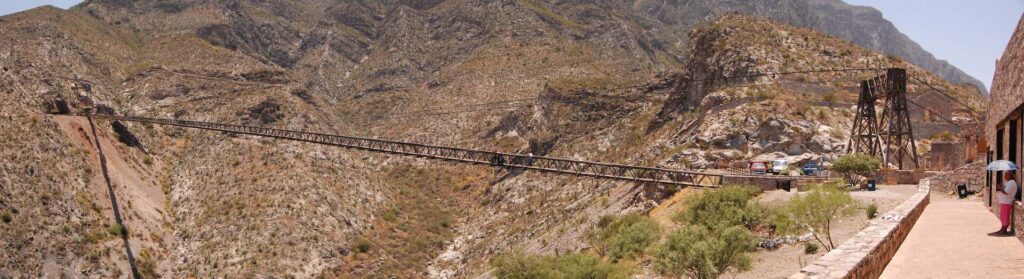
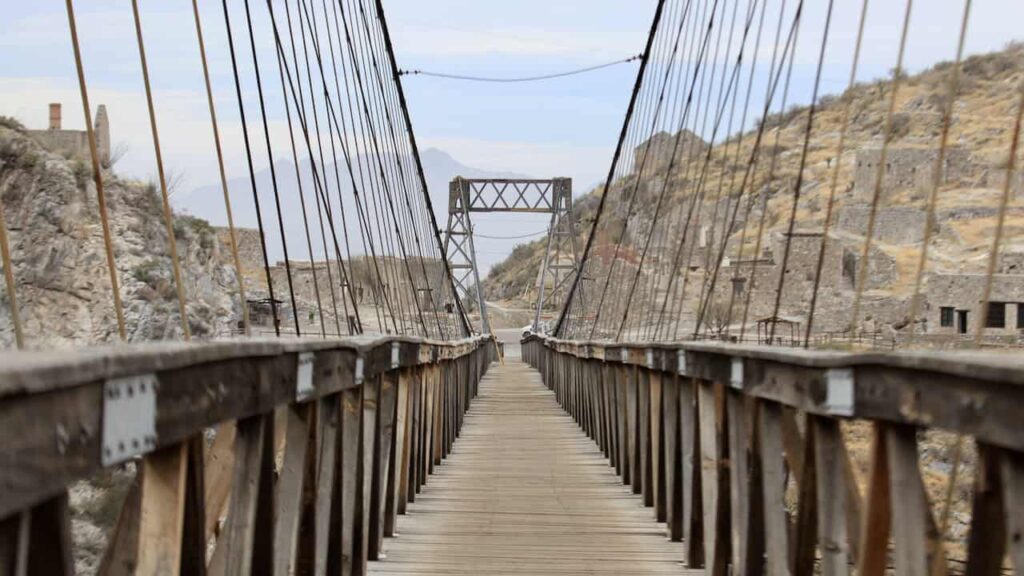
Mapimí has more than 400 years of recorded history. Spanish settlers formally founded the town in 1598. Indigenous peoples lived in the region long before Spanish settlement. Later, silver and gold discoveries turned Mapimí into an important mining center. The town also became part of the historic Camino Real de Tierra Adentro. Today, Mapimí is a Pueblo Mágico known for its mining heritage and historic architecture. Nearby attractions include Ojuela, the Zone of Silence, and the Mapimí Biosphere Reserve.
Credit: Photo by panza.rayada via Wikimedia Commons, CC BY-SA 3.0.
Final Thoughts
The Mapimí Silent Zone remains one of Mexico’s most intriguing destinations, partly because the line between science, history, and legend is so fascinating.
The 1970 Athena rocket crash is a documented event, while stories about strange lights, UFOs, unusual creatures, and communication interference have become part of the area’s mythology. At the same time, the surrounding desert and Mapimí Biosphere Reserve offer a genuine natural attraction for travelers interested in exploring a remote part of Mexico.
Whether you’re visiting because you’re fascinated by unexplained phenomena, interested in desert landscapes, or simply looking for one of the world’s most unusual destinations, the Zone of Silence Mexico offers a memorable adventure.
Just remember to prepare carefully before traveling into such a remote desert environment. The mystery may be what brings you there, but good planning is what gets you home safely.
Note: Thank You for Supporting My Blog’s Journey!
I’m so grateful you’re here! This post includes affiliate links I love. Buying through them may earn me a small commission at no cost to you. Your support keeps this blog thriving, letting me share more adventures and tips with you. A huge thank you for choosing these links—it truly means the world to me and fuels my passion for creating!
IF YOU LIKE THE INFO ABOUT THE SILENT ZONE, PIN THIS POST TO SAVE NOW!

Khoi Nguyen
Khoi Nguyen builds The Broad Life with a desire to inspire people go exploring the world and live a more interesting, experience, and adventurous life. This blog shares the stories, pictures, and experiences at destinations where he has traveled to.
30 Comments
-
-
Khoi Nguyen
Yasss, this is really cool! Imaging you may meet an alien there haha.
-
-
Leanne Wong
I have never heard of this before! I’d love to go for a trip there. I think it would be quite an adventure to see if my signal really does die out.
-
Khoi Nguyen
The moment you realize the truth will be one of the best parts of your adventurous life.
-
-
Brianne
How cool is that?! I’d love to take a trip there with the family. I think we’d have fun telling the kids all about the stories of the area.
-
Khoi Nguyen
Haha, going with a group will surely be less scary than an individual.
-
-
Kuntala
I would love to visit Mapimi one day. I love exploring places like this that are so steeped in mystery and urban legends.
-
Khoi Nguyen
Yeah, a place like this always brings me excited to explore.
-
-
Elizabeth O
That is so amazing! I’ve never heard of Mapimi before. I find places like this so fascinating. I’d love to go. I actually live close enough to the border that I could make a short weekend trip out of it.
-
Khoi Nguyen
That’s a good idea.
-
-
Gervin Khan
First time to hear things about this place, it looks interesting but don’t have a guts to stay and explore the place because I hate to lose in one place, hahaha!
-
Khoi Nguyen
Haha I can understand.
-
-
Eileen M Loya
That is really interesting. It just makes me wonder why such things happen there. I want to find out myself, but I am not that brave. I am going to read more about this Zone of Silence. You really got me hooked on this topic.
-
Khoi Nguyen
Perhaps you can host a group of like-minded people to explore this place together. It would be safer to do so.
-
-
-
Khoi Nguyen
Thanks for your comment!
-
-
-
Khoi Nguyen
Do you want to travel to and explore this place?
-
-
abzstylz
I’m looking forward to my trip for summer to Mexico, so I’m hoping to visit the Mapimi. Thanks for sharing!
-
Khoi Nguyen
Please share to me your experience at the place after visiting it!
-
-
Cindy
That sounds like a very interesting place! We found a place in Belize that had magnetic forces that would move a vehicle!
-
Khoi Nguyen
Wow, that’s interesting! Can you share more about that place?
-
-
Dr. Elise Ho
That sounds pretty interesting. I am not so sure that I would be visiting but it is still fun to learn of new places.
-
Khoi Nguyen
Yeah, this place could be dangerous to visit. I’m not really sure about that.
-
-
LifeMagHealth
Sounds to be an amazing place! I would love to visit soon! Thanks for sharing your experience!
-
Khoi Nguyen
Absolutely! Please share with me your story after you visiting the place.
-
-
Nyxinked
This sounds like so much fun! I’d love to visit this. I can’t wait until we’re allowed to travel again!
-
Khoi Nguyen
Sounds great! Please share with me your experience after you visiting the place.
-
-
Ly Chi
I would like to know what people in the area are experiencing. For example sighting of people out of no where like Ernesto and Josefina Diaz case in 1975 or Ranches around the area. It would be great to have another article on that!
-
Khoi Nguyen
You make a great point.
I will look into that.
-



Ben
That is really cool! I’d love to visit. I know it’s kind of an urban legend thing, but those are the most fun places to visit!